Showing posts sorted by date for query Champions Dinner. Sort by relevance Show all posts

Saturday, April 13, 2024

Lessons from Masters Week+: What Money Cannot Buy

At the 58th Annual Hibernian Newman lunch, John Duggan, Sr. the 2024 Hibernian of the Year, shared a little bit of his Irish upbringing in San Francisco. He thanked and told wonderful stories about his parents. He said "while we may not have had a lot of money—or material wealth—we were incredibly rich in love, family, strong values and more."

His speech gave me pause to consider further all that money cannot buy. I continue to return to this question because it's worth serious reflection. Though we live in a society driven by consumption and the mighty dollar, are these the things that make life worth living? What makes people truly rich? This is not a new question, but I see how Sports and Spirituality has given me answers. 

Spirituality
I kicked off Holy Week with Mass at Notre Dame de Victoires for "Erramu Eguna." This Palm Sunday liturgy, is entirely in Basque. Inside the church, I heard the voices of the Elgarrekin Choir as well as the drum and bugle corps of the Klika. I was surrounded by a multi-generational gathering of families and individuals—so many of whom were able to respond and sing in the Basque language. 

After Mass, we convened in the basement for croissants and hot chocolate. While my ethnic heritage is anything but Basque, I appreciated the colors and symbols associated with their heritage. I found the language fascinating—it is so different than Spanish, Catalan or French. The day's festivities also included handball and a special lunch and Easter basket raffle—at the Basque Cultural Center (BCC). 

As we left the church, I turned to my friend Eileen and said "one of the greatest gifts you can give a child is culture. Whether it's ethnic or religious—one cannot buy culture." Those who have a strong sense of culture are rich indeed.

Sports
Earlier this week, I received a message near and dear to my heart from a former colleague.

Subject line: Happy Masters Week.

Dear Annie,
   
I know this is one of your favorite weeks of the year, so I want to cheer you on. Hold on during the rest of Fourth Quarter.

This message cost nothing to send, and yet to me—it is priceless. Having friends and colleagues who understand us and our passions is a rich blessing. Thank you, Shag!

One of the joys of teaching about The Masters is informing young people about it's unique culture and traditions. Culture is expressed in language, attire, color, food, drink and more. It is understood through action and shared traditions. We often come to know culture through people. The Masters is one I have participated in and appreciate. I think it's a great case study in culture.

Language: While golf has its own language—birdie, bogey, eagle and albatross, the Masters Tourney does too. For one, those in attendance are not known as fans or spectators—they are patrons. You need not get a ticket for the first golf major of the year, you will need a badge. A patron in 2016, I am always happy for golf fans who get their own badge.

Actions: Augusta National holds its patrons to high standards. What other sporting event can one attend in today's world where cell phones are completely forbidden. And one of the more unique practices is what Mark Cannizzaro refers to as "the chair culture."

The  chairs are purchased at Augusta National. Patrons cannot bring their own chair onto the grounds. So there are thousands of those green folding chair with a Masters logo all over the golf course, ringing greens and tee box. 

"The etiquette is if the person isn't there, you're allowed to sit in the chair," Katcher said. "If the person who owns the chair comes, you simply get out of the chair. If you're smart, you have your name on the back of your chair so you can always find it."

How does one decide what hole and where one will leave ones' chair? When the gates open at the designated time, patrons are free to walk—not run to the particular perch. It's incredibly exciting, egalitarian and civil. Not something to take for granted in today's day and age.

Attire: 
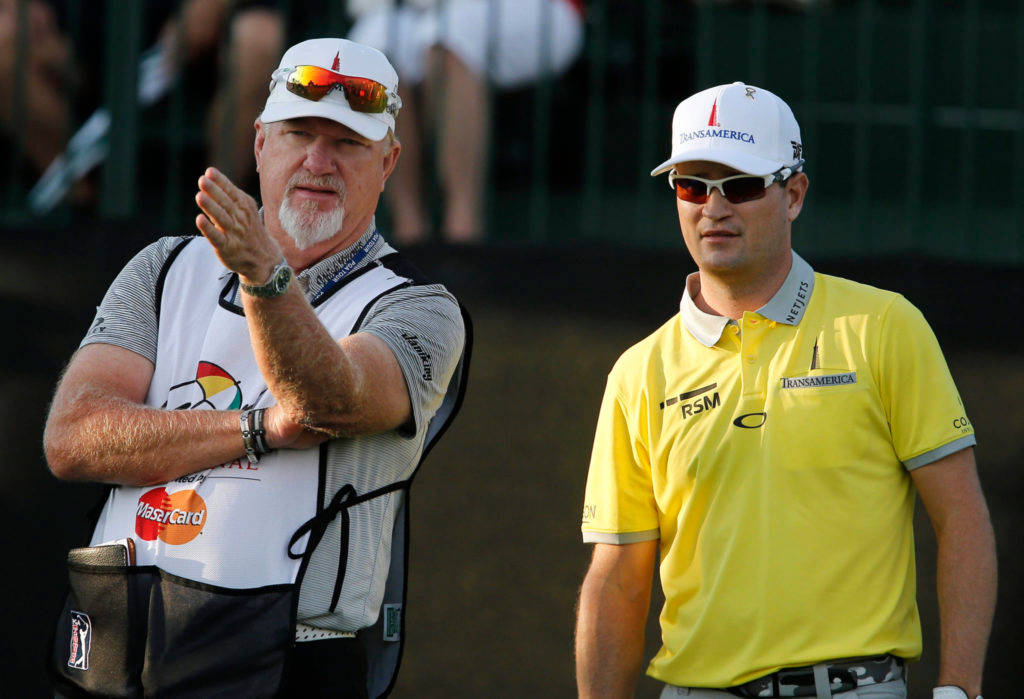
Because of the no cell phone policy, you better make a plan of where and when to meet friends and family. One tactic patrons use to work with what might be a logistical challenge is to wear bright colors. The only problem is so many other people are wearing them too. On the other hand, the caddies are required to where a bleach white jumpsuit and green Masters hat. In spite of the uniform, which I find striking next to the green of the course,  caddies still find ways to express themselves, within the rules. Whether it's a Grateful Dead t-shirt under the jumpsuit, cool kicks or a personalized yardage book‚—humanity always finds a way to show who we are and what we care about. Give it a close look...

In Conclusion
I could write so much more about the unique culture of the Masters—traditions like the Champions Dinner or the Par-Three Contest, the prized green jacket, its heroes as well as its faults, failing and limitations. I mentioned these three because they were the examples I used in class. The lesson I shared however is not limited to The Masters; it doesn't end after the final round on Sunday. 

I told them one of the reason I love teaching at St. Ignatius is because we have a strong sense of culture—thanks to our Jesuit tradition, Ignatian way of proceeding, and our San Francisco heritage. Each one of them has inherited that culture. In four years time they learn and participate in our traditions; many shape them in their own way. Students at SI speak a new language. We hold them to certain standards, we expect they will act as men and women for and with others. And yes, even in April and May, I ask my seniors to wear an attire that consists of a collared shirt and no blue jeans. Though their education is anything but free, what might be most valuable is not for sale—a faith that does justice, our values, culture and traditions. I hope Sports and Spirituality at school and beyond help young people understand that gift.

Photo Credits
John Duggan, Sr.
Fans

Badges
Tiger and LaCava
Basque: Kilka


Friday, March 22, 2024

Sports and Spirituality: Making Teaching Fun Again

I asked a few colleagues at lunch the other day, "When is teaching fun?" I heard answers like "when you are not grading." Someone else said, "when you are not giving detention for dress code." I didn't get the information I was seeking. And then I realized that no one should ask this question at the end of the third quarter. Timing is everything, right?

Here's the good news. In spite of the grind and the rampant senioritis, I have answers. Teaching is fun when I get to engage with my favorite topics, play with ideas, make connections, think creatively and invite young people to come along. For me, it fun to teach and talk about culture, language and of course sports and spirituality. 

Though I do teach Sports and Spirituality, a senior elective in the Religious Studies department, one need not have a class dedicated to the topic alone. I think there is a way for every teacher to incorporate what they love into their curriculum. There's a lot to be said for the teacher who is enthusiastic and passionate about the subject. #Differencemaker. 

So to keep some, if any, fun in teaching—give this a go. You can use this information at the beginning of class as students settle in or as a fun way to wrap up the period. Whether or not you are an educator, each one offers something to think about. Enjoy.
Opening Day, South Korea and Population Demography
March 20 marked Opening Day for Major League Baseball. If you feel the need to put an asterisk by that, I unerstand. For 28 of the 30 MLB teams, Opening Day is not until Thursday, March 28. To further complicate matters, MLB teams have the home opener (if their team starts on the road), Opening Night and Opening Day. I have written about this misnomer before. Regardless, the San Diego Padres and Los Angeles Dodgers traveled to Seoul for a two game road stand in what is the first time an official MLB game has been played in South Korea.

A number of questions should follow:
  1. Why South Korea?
  2. Why those two teams?
  3. Does having more than one Opening Day compromise the significance of the tradition?
A few answers: For one, baseball has exploded in popularity in South Korea. As noted by sportswriter Jee-ho Yoo, "People just love baseball here." Turns out the country has produced 28 MLB players and the first to be drafted in the United States. Chan-Ho Park, who pitched in MLB for nine years, threw out the first pitch—wearing a dual team jersey. Perhaps that is why those two particular teams made the cross-Pacific flight to what is the sixth largest metro area in the world.
Sixth largest!? Yes, Seoul is home to 24.3 million people. I think it's valuable to teach and share population demongraphy. Ask students if they have been to Seoul.  Invite students to guess the other answers.

Thank you to YahooSportsAM for the material...and the hint: The five largest metro areas are in Japan, India, Indonesia, China and the Philippines.

Answers:
  • Tokyo, Japan (36.5 million); 
  • Delhi, India (30.1 million); 
  • Jakarta, Indonesia (29.8 million); 
  • Shanghai, China (26.9 million); 
  • Manila, Philippines (25 million)
Most students got two or three out of the five. And, I had but a handful of Opening Day purists. Students think it is good to grow the game and give international exposure.

Feel free to research the faith traditions of those countries named. I guessed higher, but Korea is 11.9% Catholic. 

A Different Kind of Holy Week
The 2024 Masters will take place April 11-14. The events that preceed the first major of the year are magnificent; each one steeped in tradition. It starts in Augusta’s clubhouse on the Tuesday night of tournament week with the Champions Dinner. The reigning champion sets the menu and gets to pay the bill for this elite dinner party. Past winners only.

The 2023 winner Jon Rahm who hails from Bairika Spain created a menu that reflects his Basque heritage. My mouth started watering and I recalled traveling to the Northeast part of Spain to walk the Camino Ignaciano. Each day concluded with a delicious meal featuring cured meats and flavors much like what you see here.
Ignatius of Loyola, the patron saint of the school where I teach and the founder of the Society of Jesus is also Basque. Having lived over 500 years ago, it can be challening to relate to his identity, personality and humanity, too. However, food is a fundamental for connection. It speaks to culture without words....all taste buds.

March Madness
I came to find out that "eight schools in this year's men's NCAA tournament have won multiple national championships." Thanks again to YahooSportsAM. This weekday resource asked me to name them (hint: three are in the same state), I started to wonder if any Catholic colleges made the cut. Negative.

I then considered what Catholic University has the most NCAA championships. I held on to hope that my alma mater has that locked in for the women's tourney. The Irish do, with two titles in 2001 and 2018. For the men, the answer is difiifferent. Want to guess? Villanoa has three. Impressive.
When speaking about Catholic schools in this context, I always find it worthwhile to teach about the religious communities that founded them— the Augustinians at Villanova and the Congregation of Holy Cross at Notre Dame. Invariably that information is news to people. So much so that Sister Jean Lenz, OSF included an anecdote about this perception in her book "Loyal Sons and DAUGHTERS: A Notre Dame Memoir." 
It's hard to imagine that I knew nothing about the Congregation of Holy Cross and its relationship to the University of Notre Dame during my adolescence on the South Side of Chicago. I suspect if anyone tested me along the way, I might have guessed Notre Dame was run by the Jesuits, a belief which fits into that somewhat legendary story about how the Jesuits took a poll to find out—among other things—which of their universities was considered the most well know, only to discover that Notre Dame had landed the top spot. 
Furthermore, it has always been surpring to me how many people thought I went to school "back East." South Bend, Indiana is as midwest as it gets. Why not get students to locate each school on a map? South Bend sits on the SOUTH bend of the St. Joseph River. Sometimes life makes sense....

I hear it often: I would love to teach Sports and Spirituality! Others tell me they wish they could take a class on Sports and Spirituality. Here! Here!  Wth this blog post, I hope I got your mind thinking of ways to get those synapses flying, your noggin moving and face smiling. There's always a lot to learn. Why not make it fun?!

Photo Credits
Chan Ho Park, Opening Day and MM Trophy
Menu

Tuesday, February 27, 2024

MasterClass on Hope and a Hole-in-One

My friend, Missy received a year-long subscription to MasterClass as a gift from her neighbor. What a wonderful, ingenious present. Launched in May 2015, MasterClass is an online learning platform that streams lessons delivered by recognized masters of their craft. It is proud of profess "Our instructors are the best in the world." Check out the list of teachers; MasterClass tells the truth. 

Missy told me about George W. Bush's class on "Authentic Leadership." A long time fan of 43, I leaned in and watched the trailer. I laughed so hard and was so impressed by W's affect, I signed up for the 30-day trial.  I was genuinely interested to hear what he would have to say about making tough decisions, building a team, public service, personal diplomacy and his latest passion: art. I had no idea that President Bush's MasterClass would relate to golf and the feat of a faithful friend. I'm glad it did. Here is the story.

I don't have an official leadership or title at work. For example, I'm not a school administrator nor do I have any aspirations to work as an athletic director. Heck, I'm not even sure I will work as a head coach again. This might explain why my mom asked me why I enrolled in this particular class. I told her that I think we all benefit from learning more about leadership. I figured the other topics could speak to me and be of some benefit. It was...it is. 

I loved hearing W's insights on leading the country and a company—the Texas Rangers. As much as I kept thinking of how the course connects to different aspects of my own life, I couldn't help but think of my friend Malia and how these topics would be of interest to her. Why? In January 2024, Malia was named president of the Olympic Club—a private athletic and social club in San Francisco, CA. She is the third female president in the club's 164 years of history.

In my 10+ years as a member, I have served on three different club committees. I appreciate learning from and witnessing multiple styles of leadership among the committee members and chairs who seek to make the club even better. Full disclosure, Malia happens to be a good friend, and one of the reasons our for our friendship is not only golf but our shared interest in club governance. In committee roles, I have been privy to Malia's due diligence toward all matters that pertain to the club. She works tirelessly toward clear and consistent communication between staff and members. She is gracious and respectful, smart and visionary. She will remember your name and your story. She smiles and says hello. She is a lot of fun. In short the club is in very good hands. 

As written in The Olympian Magazine, Malia said she grew up in an athletic family. She added, "I'm the weakest player of the group. So everyone wants to partner with me because of my strokes." All joking aside, like her parents, Malia has hit a hole-in-one. That is until Sunday February 25, 2024 when she hit her second ace. 

Standing in the tee box on the seventh hole of the Ocean course, she didn't think she hit her ball right. Regardless, we followed the path of the ball. I saw it bounce on the right side of the fairway just short of the green. It started rolling and didn't stop until it found a home in the cup. One of the women in our foursome said "I think it went it." The other woman agreed. We told Malia to use her rangefinder to look on the green for the ball. It was nowhere in plain sight. Ever one to play the odds, I said "Malia, both Brook and Bonnie are pretty sure it went in. I think if  the two of them saw the same thing, we must have something there." She laughed. She smiled and kept (relatively) quiet until we could confirm what we just saw. As we approached the green, we all knew what happened. We were able to capture on video her victory path toward the hole. She reached in and there it was: a hole-in-one. 

I can't tell you what that must feel like as I keep wishing on my birthday for my first one. However, to witness one is exciting enough. #Adrenaline city. And when something this exciting—surprising, joyful and unexpected as a hole-in-one happens to a person, it's just not the event that makes the impression, it's everything else about it, too.

Malia's first concern was to follow the due process that this was a certifiable hole in one. Because Hole 7 is under repair, all tees have been moved to one singular tee box. Ever mindful of protocol, Malia reached out to the head pro who worked with another staff member to get the green light. She did. And for anyone who asks, yes, she hit a hole-in-one from the championship tees. 

After the round, during which Malia hit for the cycle—eagle, birdie and par, our group accompanied her to the pro shop where she thanked the staff members for their help. They handed over an OC pennant, commemorating the feat. We then went to the Champions Bar where she greeted folks with an introduction and the big news."Enjoy a beverage of your choice, on me" she said. To see the reactions of other club members—the smiles, the fist bumps, high fives and hugs was what made the ace that much more special. What hole? What club did you use? It was awesome to see the unsuspecting people around us meet Malia under the most auspicious of circumstances ;-) 

I had to leave the spirited gathering to celebrate my sister Sarah's birthday. After our dinner, I asked Sarah—an artist and painter— if she would be interested in watching the final chapter of George Bush's MasterClass, entitled "Happy are the Painters" with me. I read the description 

Join President Bush in his personal studio in Maine. The former president concludes his class by sharing why he decided to start painting and how he views learning as a lifelong pursuit.
This session focused on not only why he started but why he continues to paint. In addition to his love of learning, Bush used the words of another world leader who took up painting after his time in office to explain why it's his passion today. Churchill said

Happy are the painters, for they shall not be lonely. Light and colour, peace and hope, will keep them company to the end of the day.

Though these words appeared on the screen beside the artistic work of Churchill, I couldn't help but connect his sentiment to what occurred on the golf course earlier that day. I thought back to Malia's hole in one. With 20/20 vision, my mind's eye sees  her standing in the tee box, her stroke, the arc of the ball mid-flight and the result of her effort. 


We golfers are the painters of sport. Each round is characterized by its own number of strokes. The golf club is our brush. We can only play in the light. Indeed, the game is an exercise in hope. It never leaves me lonely.

During the round, one can feel inner turmoil. Many strokes are toiled and exacting. But there's always some part of the experience that offers an inner peace—the beauty of the course, exposure to the elements and the changing of seasons that time with the game affords. When the strokes are smooth—light and easy, fluid and fun the painters, I mean golfers are very happy.

How lucky are we to keep company with friends to the end of the day? Friends we may have met through this artistic medium that we celebrate and honor in many ways. But for whom on Sunday, February 25 we did for a singular brush stroke, a hole in one. 

Congratulations, Malia or as many people call you—Madame President. Time for us to figure out what is your presidential number....

Photo Credits
The Olympian

Sunday, March 19, 2023

The Champions Dinner: A Gathering for Coaches

The vernal equinox is upon us. Schools are entering the fourth and final quarter. Spring sports are well underway. Andy Williams sang "It's the Most Wonderful Time of the Year" about the Christmas holiday, but those of us in schools may suggest otherwise. Easter break is in sight and the end of the year isn't far behind. In short: it's time to prepare for graduation and other end of the school year traditions and gatherings. An important one to keep in mind is a banquet to honor and thank coaches. 
Athletics Office at St. Francis 2021-2022

When I started coaching at Saint Ignatius College Prep in 2002, the coaches' dinner was held at the iconic House of Prime Rib in San Francisco. The President of the school paid the bar bill and the staff sat in one room where the volume hit eleven. Yes, 11. The athletic director acknowledged retired coaches and thanked the school administrators for their support of our sports programs. Coaches who had worked for 10, 15, 20, 25 and 30 years received an honorary plaque. I know many people don't want another plaque, but I love mine. To this day, the 10 and 15 year plaques hang proudly on a wall in my office—a true badge of honor. My colleague, who has head of girls' cross country, told her husband (another coach) that he was the designated driver on the evening she got her 10 year award. We drank to that.

This event had cachet. You wanted to be in the faculty lounge the next day to share stories from the night before. I won't go so far as to say that people stayed in coaching to be invited to this dinner, but I know that folks saw it as a feather in their cap—albeit a cap that is often worn out, faded and tired from the story of a season. But that's coaching....

SI Athletics outgrew the HOPR and the number of on-campus coaches has diminished, so the narrative around this meal has changed. Thanks to the #1 golfer in the world, however I have a solution and it can be appropriated for any school: The Champions Dinner. 
This gathering is a nod to a meal that takes place on the Tuesday night of The Masters week (The Masters is the first grand slam event of the year in golf, and as I wrote here, my drug of choice). Past champions gather in the Augusta National clubhouse for a dinner hosted by the defending champion. No coaches or caddies, WAGS or wannabes. No media either.

Scottie Scheffler
, the 2022 champion posted the menu for this year's event via Instagram. Mark Cannizzaro, the author of "Seven Days in Augusta" writes, "the menu choices reveal something about the players and where he's from." For example, Scotland's Sandy Lyle served haggis and Germany's Bernhard Langer served Wiener Schnitzel." Scottie's choices prompted some creative remarks. All that commentary got me thinking.

Why not integrate this tradition into the end of the year coaches' gathering and call is the Champions Dinner?!
Outstanding on-campus support for athletes at St. Francis
The purpose of the event is to celebrate ALL the success of our seasons. The athletic director can  announce the number of league, section and state titles as part of the program. Among those who earned a title, pick a name and ask him or her to choose the menu. Undoubtedly, it will reflect something about the coach and where he or she is from. 

We know victory tastes sweet. And it might be that much more enjoyable with a menu (and title) on display. It's also a great talking point among coaches—what would your menu feature?!

Cannizzaro adds, "It's one of the most exclusive dinner reservations on the planet, and it doesn't even take place on a Friday or Saturday night. It is, however, one night a year." The Coaches Champion Dinner may do the same.

At Saint Francis, we decided our coaches banquet would be a barbecue. One of the Assistant ADs loves to cook and offered to do that for this gathering. I told him "you know how people will say Don't quit your day job? This food is so good, you might want to think about it." (I was kidding) Not one single person walked away hungry from that dinner. All felt appreciated by his service. Could this Champions Dinner make room for skirt steak? ribeye? linguisa? burgers? Invite a coach to make the call. I don't doubt Chris could cook it. 
Truly one of the best meals I had last year....

Three time Masters champion, Phil Mickelson said that his favorite part of the Champions' Dinner is the conversation. He said "those dinners are usually the chance for the older guys to tell stories. Gary Player and Bob Goalby are great storytellers and they tell some fun ones. It's always fun when Jack Nicklaus and Tom Watson tell stories because they always have some good ones of players I watched growing up. Some of us will add things, but usually it's the older guys telling the stories. I like to listen that week." My hope is that might be true for yours, too.

Alex Auerbach writes, "The life of a coach is incredibly demanding. Coaches are expected to work long hours doing cognitively demanding tasks like breaking down film, meeting with players to explain game plans, and preparing practice schedules. Coaching culture glorifies the so-called “grindset,” i.e., the idea that how hard you work matters more than how effectively. Unfortunately, coaches are often rewarded for this approach. It creates a sense of control amidst chaos and, as a coach has said to me, “nobody ever got fired for being in the office too much.”

Amidst this reality, take a night to 
make your coaches feel like champions Why not confer upon this group that they are part of something special? It is so important to help those who teach and coach feel appreciated and celebrated. Let them know the bar and/or the barbecue is open. 

Photo Credits
Scottie's Menu
All others photos from Coaches' BBQ 2022

Sunday, April 11, 2021

Matsuyma, Hideki: Honoring the Victory, Custom and Culture of the 2021 Masters Champion

Japanese culture places such emphasis on the family, that professional athletes are introduced and recognized by their last name first. It is with that spirit and custom in mind that we extend the warmest of congratulations to the winner of the 85th Masters: Matsuyma, Hideki. 

Matsuyma, the first Japanese golfer to win The Masters also earned his first major championship title by finishing the 2021 tourney at 10 under par. Here are but a few insights honoring and related to the 29-year old victor.

Why Matsuyma won: Moving Day 
As many of my readers now know, Moving Day is a colorful way to describe the third day of a tourney—usually Saturday—because it is the day where competitors try to set themselves up for the final push on Sunday.

Golf fans love to dial it in on Moving Day because certain players advance up the leaderboard by leaps and bounds. As written by Golf Digest, "Others collapse under the pressure and slide quickly, knowing that simply by making the cut, they've assured themselves a decent share of the purse." In short, moving day is  the day you can confidently move up or you can move back but you cannot lose sight of what that lead score is.

One could argue that a golfer wins a tournament because of how they play 72 holes of golf—but one look at Matsuyma's scorecard from Saturday: a 65 says a lot. With five birdies, one eagle and a bogey free round following his two prior rounds, (which were both under par), Matsuyama created distance between himself and second place. At the awards ceremony, he admitted that his nerves were driving the ball from the first tee on during the Final Round. However, thanks to truly making moves on Moving Day, Augusta National extended a green jacket to a new man.

On Saturday morning, before I headed up to play my own round of golf, an announcer proclaimed—"I don't buy into this Moving Day stuff. Today is like any other day in the tournament." I heard what he said and looked sideways. "That's no fun," I thought. I love the jargon. I love the spirit.  And as evidenced though Matsuyama, there IS something to it.

Diversity Has Many Faces
In the sixteen years I taught at Saint Ignatius the school grew increasingly more diverse. It was not the same community it was when I started working there in the Fall of 2003. People too often made assumptions about who comprised that community. Their perception was not reality. S.I. should be very proud of the efforts it made for the student body and faculty to reflect the diversity of the Bay Area--a diversity that has many faces and looks different than what one might expect.

I speak of this truth because I find similar assumptions made about the game of golf. While there is certainly much to question in terms of access, equity, inclusion and the need for diversity, I would like to suggest the face of the PGA and the LPGA is not what you think. 

Of those who finished in the top 10 at the 2021 Masters nearly half are international. You have the winner from Japan, two Aussies, one Englishman one Spaniard, and one Canadian. Of the five Americans—one is biracial, another is Samoan/Tongan. There is really only one jerk and one with a waist size 26 on a good day. Again diversity comes in many forms.

My Favorite Moment
I could not help but appreciate the composure exhibited by the champion as he secured the win and extended thanks and congratulations around him. After a warm embrace, Matsuyama's caddy started to walk the flag back to the 18th hole. But,  before he placed the pin in, he took a bow. He bowed to the crowd, to the course and the game of golf. 

Having traveled to Japan in 2015 and attending a baseball game in Seibu, I know just a bit about Japanese culture and traditions. They are a people who honor the sacred and show respect with the simplest of gestures: a bow. I don't think I've ever seen a caddy do that before. It was a special moment.

The Champions Dinner 2022
I don't want to make any assumptions but I have a strong suspicion that a lot of golfers are already looking forward to the 2022 Champions Dinner. As mentioned in Big Night: The Champion's Dinner, the previous year's winner sets the menu. Given how many people are mad about sushi....how many of my friends enjoy Saki, or for me—love Kobe steak! that menu is not one they will want to miss.

In Closing
I am always sad when The Masters comes to a close. Given COVID restrictions, none of us had to wait a full year for the 2021 tournament to commence. But, as we progress toward a healthier and reopened society, we live in the hope of what next year will bring. 

This Masters brought a limited number of patrons. Though they didn't litter the fairways or fill grandstands, they did what fans ought to do. They cheered loudly, giving away what was happening on another hole before we could get the report from CBS. They stood to clap and acknowledge the great golf by the players in the hunt and most especially to this year's victor: Matsuyama, Hideki. 

Thanks to the members of Augusta National for hosting my favorite sports week of the year.

Photo Credits
Xander and Hideki

Tuesday, April 6, 2021

Big Night: The Champion's Dinner at The Masters

It's always fun to ask what if. What if you had your choice of playing golf on any course with any foursome—Where would you go and who would you include? What if you could visit one sporting event—What would it be and where? What if you could attend any dinner party—Where would that be and what would you eat? My question is a timely one. Why? Because the answers to those questions involve a singular location connected to a specific event. Welcome to Masters Week. And, tonight is the Champion's Dinner. It is a Big Night—a sacred meal in a sacred space. Here's why.

As written in Seven Days in Augusta, "It's one of the most exclusive dinner reservations on the planet, and it doesn't even take place on a Friday or Saturday night. It is, however, one night a year."

Tuesday night of Masters week, past champions gather in the Augusta National clubhouse for a dinner hosted by the defending champion. No coaches or caddies, WAGS or wannabes. No media either. To say its exclusive is short-sighted. It is men only. It's not a large crowed. It's not even subject to invitation. I don't think there's anything else like it—I can only imagine.

The Champions Dinner was first put into place during the 1952 tournament when defending champion Ben Hogan gave a dinner for the previous winners. Hogan proposed the formation of the Masters Club, with its membership limited to Masters champions. He wrote "my only stipulation is that you wear your green coat." 

Dustin Johnson, the 2020 champion posted the menu for tonight's gather via Instagram. Cannizzaro writes "the menu choices reveal something about the players and where he's from." For example, Scotland's Sandy Lyle served haggis and Germany's Bernhard Langer served Wiener Schnitzel. When I saw Dustin Johnson, the 2020 champion's menu posted via Instagram, I wasn't the least bit surprised. Though entertained by Pigs in a blanket as an appetizer, I pegged him for a fillet mignon all the way. Bubba Watson served the save menu in 2012 and 2014: caesar salad, grilled chicken breast with a side of green beans, mashed potatoes, corn, macaroni and cheese and cornbread. What more would you expect of a guy from Baghdad, Florida?!

And the greatest meals—the ones we remember and cherish—offer sustenance far beyond the food on our plate. We are nourished by the conversation, the stories and the word made flesh.

As creative and distinct as the menu may be, Phil Mickelson's favorite part of the night is of the Champions' Dinner is the conversation. He said "those dinners are usually the chance for the older guys to tell stories. Gary Player and Bob Goalby are great storytellers and they tell some fun ones. It's always fun when Jack Nicklaus and Tom Waton tell stories because they always have some good ones of players I watched growing up. Some of us will add things, but usually it's the older guys telling the stories. I like to listen that week."

Cannizzaro writes "Byron Nelson used to serve as the dinner's unofficial host for years before Sam Snead took over and then Ben Crenshaw. Mickelson credits Player with being a conversation starter who elicits stories from everyone.  It's always fun—lots of jokes and stories," Player said.

Thinking about the gathering that took place this evening—who is there and who is not—notably the five time champion Tiger Woods, I couldn't help but think of myself: Big Night. In the senior selective "Faith, Film and Fiction" students are tasked with watching this 1996 classic. They are invited to consider how this movie demonstrates a eucharistic celebration. My friend Chad, the teacher asks students to respond to the following. He writes

A “Catholic imagination” acknowledges a universe where sacred places and times can be experienced . What experiences/ memories do you have of sacramental meals? What about those meals helped you experience communion and the sacred? What made these meals different/ special?

I see these questions and I can only wonder: What if I were allowed to attend this dinner? 

I know my answer. I would teach this group about the spiritual event they are privy to. They are sharing a meal and sharing stories. What makes is meaningful and memorable is that the menu represents more than one man's personality or homeland. At this table, the elders are respected and revered. They share their wit and wisdom. Those gathered at table listen and learn and one day will have their chance to impart their own nourishment for the self and the soul. 

And in two days, competition will unfold on the greatest of golf courses. The players will make their mark. The crowds will respond. The beauty of Augusta National will shine. A new work of art awaits....

Photo Credits
DJ and flags, Champions Dinner and Table Setting
Menu: DJ's Instagram page!

Thursday, September 17, 2020

Seven Days in Augusta: My Book Review, Sans Expectations

As written in my last post, I have learned to embrace a philosophy of low to no expectations. I don't take naturally to this way of seeing the world, but like a lot of things in life, it's important to remember that we don't have to get there alone. Let my book review of "Seven Days in Augusta: Behind the Scenes at the Masters" serve as my example.

I doubt that Mark Cannizzaro, a columnist for the New York Post and the author of this book would appreciate that introduction for his latest work. However, that is exactly how the text came to me.

My friend Lesley —one of my favorite golfing buddies—and I speak a lot of sports. She is tuned into the San Francisco Giants, our local sports station: KNBR, Golden State Warriors and of course the PGA/LPGA. When I saw her copy of "Seven Days in Augusta," I was excited to hear her impression. I picked it up and enthusiastically asked,  How was it? Lots of great stories? KNBR radio host Brian Murphy had lavished such praise, I felt for but a moment as though I were holding the golden ticket.

She told me, "for all the air time and hype it got, this book is not at all what I thought it would be.  It jumps all over the place. There are so many necessary edits, I wanted to grab a red pen and make changes. Even Phil's intro was lackluster." I thought to myself "that's too bad." I shrugged my shoulders and put it in my bag anyway. Expectations GONE.


I cannot tell you just how much I enjoyed this read. For one, the subject is among my favorites. I went to The Masters on Saturday and Sunday in 2016. Though the outcome wasn't what many golf fans had hoped for (the defending champion Spieth led by five shots when he made the turn, made a quadruple-bogey 7 at the 12th. He tied for second place, 3 shots behind the winner), I did see two holes-in-one that day. Just to experience what I have long watched on television was super special. To combine my memories and impressions with Cannizzarro's  anecdotes, traditions, history and stories was delightful. 

The foreward— written by Phil Mickelson— includes stories that only a beloved athlete like him has to share. For example, he recalls legendary foursomes with past champions and athletic celebrities. In a practice round before the tournament, he played with future Hall of Fame quarterback Tom Brady. Mickelson writes, "Tom said "Hey, listen. I've got to throw to [Patriot's receiver Julian] Edelman. I always throw a little bit to keep my arm sharp. Do you mind catching a few passes?" I can't believe Mickelson said "yes." I mean, I can—but is his hand insured?  

It was fascinating to read what each of his three championships meant to him. Not many golfers can give that take. Lefty said,

When I won the Masters for the first time in 2004, it was one of those moments that you kind of realize a dream. When you put stuff out there in the universe and you say, "This is what's going to happen, I'm going to do this," and then you actually do it...that's a cool moment. And that's what was happening for me when I won there for the first time." 

Whether or not Mickelson read "The Secret," I think there is something to be said for setting goals, creating a can-do mindset and then taking in the moment as it happens. Reading from this champion inspired me to consider how I do that in my life and remembering to tell my athletes to do the same.


"Seven Days in Augusta" is organized by days of the week, reflecting on a unique attribute of the tourney that corresponds to it. For example, Part One: Monday includes chapters entitled First Impressions, The Locals and The Paper.

I loved reading about the local rag, The Augusta Chronicle "which might as well be named the Masters Chronicle, because there isn't a publication on the planet that has done a better, more thorough and creative job on chronicling the history of the Masters than the local paper." 

Unfortunately, I did not pick up my own copy when I traveled to the second largest city in Georgia. However, reading about their paper sparked memories of "The Observer" —the student newspaper at Notre Dame. The Observer's back page featured sports stories. Without exception football was covered in extensive detail...but so was Bookstore Basketball, the world's largest five-on-five tourney. Features were so detailed and lengthy, we wondered if we read more about Bookstore heroes and heroines than the actual men's and women's hoops teams....

Given financial decline of the newspaper business and the digital revolution, The Augusta Chronicle will likely become a part of Masters history. It should be no surprise that Cannizzaro included its import and I'm glad he did.

Part Two: Tuesday features The Dinner, The Town and The Tree. I can't wait to write a future blog post on the traditions and the menus that take place at the Dinner—a truly exclusive event, open only to past champions!

The Table of Contents speaks for itself. Beyond the Par-3 contest, the honorary starter, moving day, historic defeats and climatic victories, "Seven Days in Augusta" brings the people, place and events of The Masters to life.

I am pretty sure I have passed on a vignette from "Seven Days in Augusta" in nearly round of golf I have played since I read it. Spend enough time with me and you will learn that I want to eat at T-Bonz—a steakhouse that hosts the final dinner for caddies. Or, how lucky I feel  that I was able to attend the crown jewel of golf when I did. New security around tickets, makes that even more tough. 

can see how this tournament is like Christmas week for those who live and work in Augusta. I passed by Hooters on Washington Road and even though John Daly might not be long for this world, I'm still not sure I want to stop by and have him sign any part of my anatomy. I have always been obsessed with the green jacket—Pantone 342. I knew that Sergio wore his jacket at this wedding but my favorite story involved the much maligned Patrick Reed who wore his to a Knicks game. Sitting court-side for the first time with his wife Justine, their seats were next to Chris Rock an 2-Chains. What happened is worth reading. The bottom line is that sports really do offer the gift of connection

Would I have enjoyed "Seven Days in Augusta" as much as I did if my expectations were different? Maybe....but maybe not. 

What I have always found interesting is that we find books, but quite often—books find us. This was one of those and I'm grateful to Lesley and to reading it with no expectations. 

ENJOY!

Photo Credits
Phil Wins
Masters Pins
Book Cover
Reed at Knicks Game

Wednesday, April 13, 2011

My Drug of Choice: The Masters

In the back of my mind, I remember my grandfather watching a lot of golf on TV. Growing up, I could not understand how or why he did. What could be more boring than to watch individual men and women hit a 1.68” golf ball hundreds of yards? Today, I stand before you as someone who spent nearly three days on my couch intravenously taking in the Masters. It’s as if Augusta National pumped some sedative through my television set, and fixed my attention to 18 holes a day.

I am more of a “type A” personality than I want to admit. I do not watch one regular television program. In fact, I have not done so in four years. And yet, I logged in 15 hours with the first major of the year. So the question is obvious. What is so appealing about the Masters? Why is it my drug of choice?

My first response to this question is: ask anyone who feels the way I do. We are easy to find. On Monday, we were itching to talk to any and everyone at the water cooler about the rise and fall of Rory McIlroy, Tiger’s chase for the title and the beauty of seven men battling for the title on Sunday. Give us an inch…or a slight scent of preoccupation with it, and we’ll give you a yard. 


Bill Simmons of ESPN writes 
I love so many things about the Masters, but ultimately, what makes that tournament special is that we know the course so freaking well. There are laws with the Masters. You can't peak too early on Sunday. You can't miss momentum-swinging putts at Amen Corner. You can't lay up on 13; for whatever reason, it pisses off the Golf Gods. Your second shot on 18 has to land dead-even with the hole; it can't be too short or too long. It's the only course that feels like a living, breathing organism. 
The TV camera flies over each hole before a featured player tees off and captures the beauty of this organism. No wonder we care. 

When we realized it coincides with our spring break, we immediately gave one another a high-five. Our enthusiasm for “what could be” rivaled the enthusiasm of a player who just sank a great putt. Had we been standing up, I think there would have been a chest bump in the faculty workroom. This tourney does that to people; The Masters gods are crazy.

I love the Masters because it signifies that summer is right around the corner. The beauty of the course—azaleas in full bloom, the pure green that even the Irish could envy— shows that spring is making way for a season of warmer days and longer nights. This year, I added Augusta to the cities on my iPhone weather app. My jealousy towards those fans that walk the grounds turned to envy when I saw each day was in the mid-80s. Even the nights were warm. Sigh.

And yet, the greatest lure of the Masters is that it is crawling with tradition: the green jacket, the Champions Dinner Tuesday night where last year’s winner gets to set the menu..even the uniform white jumpsuits for caddies. And if there’s one thing that Catholics know, it’s tradition. 

From time to time, it seems that tradition is all we’ve got. Catholic Theologian, Richard McBrien teaches that 
Tradition refers to the whole process by which the Church “hands on” (literal meaning of the word tradition) its faith to each new generation--both the process of “handing on” the faith and that which has been handed on. Tradition (upper-case) includes Scripture, the essential doctrines of the Church, the Eucharist and other sacraments, and so forth. Tradition (lower case “t”) includes changeable customs, institutions, teachings and practices.
In a small way, I think the Masters offers both upper and lower case “t” for the sport of golf.

Some true gentlemen and some elite athletes have “handed on” the game to who we see playing now—young players, so many of who are fit and conditioned. Many of the customs, teachings and practices have changed as needed and many haven’t. Even Augusta National, an institution in its own right, was slow to make a change for the better when it allowed its first African American member in 1990.

We should not preserve Tradition/tradition for the sake of keeping tradition. It has to have value and integrity. It binds people to those before and sets a place for those to come. That binding can be both positive and negative. It’s an interesting way to think about what might just be a wonderful way to spend a weekend, no?

In a small way, I love that what I am watching my Grandfather watched. I am sure he looked at it with the same wide eyes of appreciation. I even think of those friends and family members who I have shared couch space with over the years to view my favorite of the Majors. Thanks for the memories! For 361 days of the year, I am proud to say that I am drug free. For that fateful weekend in April, the tradition that is the Masters, however, is my drug of choice. I hope this tradition is “handed on” for generations to come. 

Friday, December 31, 2010

Catholics vs. Convicts: The Story Behind ESPN's "Shirt of the Century"

By game day, young entrepreneurs were adding fuel to the pregame fire, selling anti-Miami T-shirt propaganda to tens of thousands of fan. Although officially frowned upon by the university, Notre Dame fans can still be spotted from time to time wearing the most popular of those ’88 Miami game T-shirts “Catholics vs. Convicts—Unfinished Business.”


Perhaps by the world’s standards, they are an unlikely duo, but not by those under the Golden Dome.
Mike Caponigro and Joe Frederick were roommates, good friends and the very entrepreneurs the book “Echoes of Notre Dame Football” speaks about. And here, ladies and gentlemen is their story—the official story behind “Catholics vs. Convicts.” The business may now be finished, but the memory lives on.

The ratio of “Mikes” to every other male name at Notre Dame is at least three to one, so Mike Caponigro like many others became something else. Known even to Lou Holtz as “Eggroll,” Mike hails from Middletown, NJ. Proud of his Italian heritage (understatement of the year) Mike, arrived at ND wearing a couple of chains, replete with the bullhorn and the boot of Italy, white shoes and the proverbial "Italian dinner jacket" undershirt. Those are just a few reasons so many people love a man no longer even called "Eggroll"...but "Roll." 

Joe Frederick on the other hand hailed from a suburb of Cincinnati, Ohio. Standing 6’5” he came as a scholarship athlete to Notre Dame. In fact, his three other siblings were D1 athletes as well. Tall, dark (blonde) and handsome, Joe could sell ice to an Eskimo. Joe somehow managed to be both the brains and the brawn behind this Ponzi scheme.


The front of the shirt read “Unfinished Business” and South Bend meant it. The October 15, 1988 matchup was to be the first in three years between the Hurricanes and the Irish. Salt was still in the wound from the 1985 season finale. In that game Jimmy Johnson, Miami’s infamous coach poured on offensive scoring well into the fourth quarter, winning 58-7.


Nearly three years later, “Scholastic,” the university student magazine featured a full-page ad that read, “Avoid the Rush, Hate Miami Early. Only 198 Days Left!” It was payback time. 

Joe’s older brother, who played hoops at Rollins a college in Central Florida had a T-shirt that read “FSU vs. Miami: Unfinished Business.” In the late summer/early fall, Mike and Joe got the idea to make shirts for the impending match up of the #1 vs #4 teams in the land.


Mike and Joe used the same slogan for the front. They included the date of the game and “Go Irish” but needed something for the back of the t-shirt. Mike’s temper started to rise as he once again described Miami. “That defines hatred in rivalries. What they stood for and how they conducted themselves—the showboating, their names on jerseys, ruthless punishment of players until the final whistle—they were the antithesis of the Irish.” Catholics vs. Convicts fit the mold.
“For a moment, football history seemed to be dangling in the balance—old vs. new, tradition vs. modern domination, heart vs. hype, “Catholics vs. Convicts.” Watch ESPN's 30 for 30: The U for much more evidence.

Mike and Joe were friends with Pat Walsh, a guy from the south side of Chicago. Since Pat was already selling t-shirts as well—his featured one with a game-day ticket: Miami vs. Notre Dame, Notre Dame Stadium—Joe and Mike decided to work with “his guy.” Shirts were printed and delivered to the main circle on campus, without receipts. As hype for the game only intensified, so did demand for the shirt. 


Mike admitted sales kept him so busy, he did not go to class for three weeks (but he somehow found time to dine at Macri’s deli every night?!). He woke up every morning in Alumni Hall to hear Joe playing The O’Jay’s “For the Love of Money” on their stereo. They convinced the student body that the team would be wearing the shirt underneath their jerseys. With no supply and high demand, Mike sold the shirt off his back for $75. And silver-tongued Joe? $100.

In the Shawshank Redemption Andy Dufresnea righteous man, wrongly convicted of killing his wife said to Red: Yeah. The funny thing is - on the outside, I was an honest man, straight as an arrow. I had to come to prison to become a criminal. I hate to say it, and it’s an overstatement, but it’s a funny similarity—our proprietors had to come to Notre Dame to become convicts. 

The administration caught word of the T-shirt sales. Mike and Joe were without a license to sell on campus. Truth be told, they sold shirts without any logos that would require permission. Nice work guys! Regardless, they had to meet with student affairs and settle their debts; a lot was at stake. Joe was NCAA athlete and Mike was already familiar with the “Iron Maiden” Ann Firth.


Mike, president of Alumni Hall, did what any good Catholic would do, he met with (and greased) his rector, a Holy Cross priest. Mike explained that what they did was in the spirit of good fun and a great rivalry. He also donated a chunk of change for improvements to the Alumni chapel. No wonder St. Charles Borromeo chapel is one of the most beautiful and prayerful places on campus. 

Obviously, the highlight of this story is that Miami came to town as the number one ranked team and lost 31-30 to who was to become the National Champions. 

Based on their meetings with the discipline board, Mike and Joe decided not to run anymore “Catholics vs. Convicts” t-shirts. Someone however continued had them print, without logos and with a license to sell. Catholics vs. Convicts II, Catholics vs. Convicts III. They made a whole lot of money, money, money, money, money, money, MONEY! 

Mike concluded his remarks with a question he posed to himself. Would I rather have the money or the story? I guess the money...no wait, at the end of the day, I would rather have the story. Yeah, the story.

Thanks, Mike and Joe for a great story. It’s been fun to relive it as the Irish prepare for post-season play in the Sun Bowl. Let’s hope we have a similar outcome.

Photo Credits Coach Holtz &
Coach Johnson
 Alumni Hall

SI Cover T-shirts: taken by the author!