Showing posts with label Steve Kerr. Show all posts

Monday, March 16, 2026

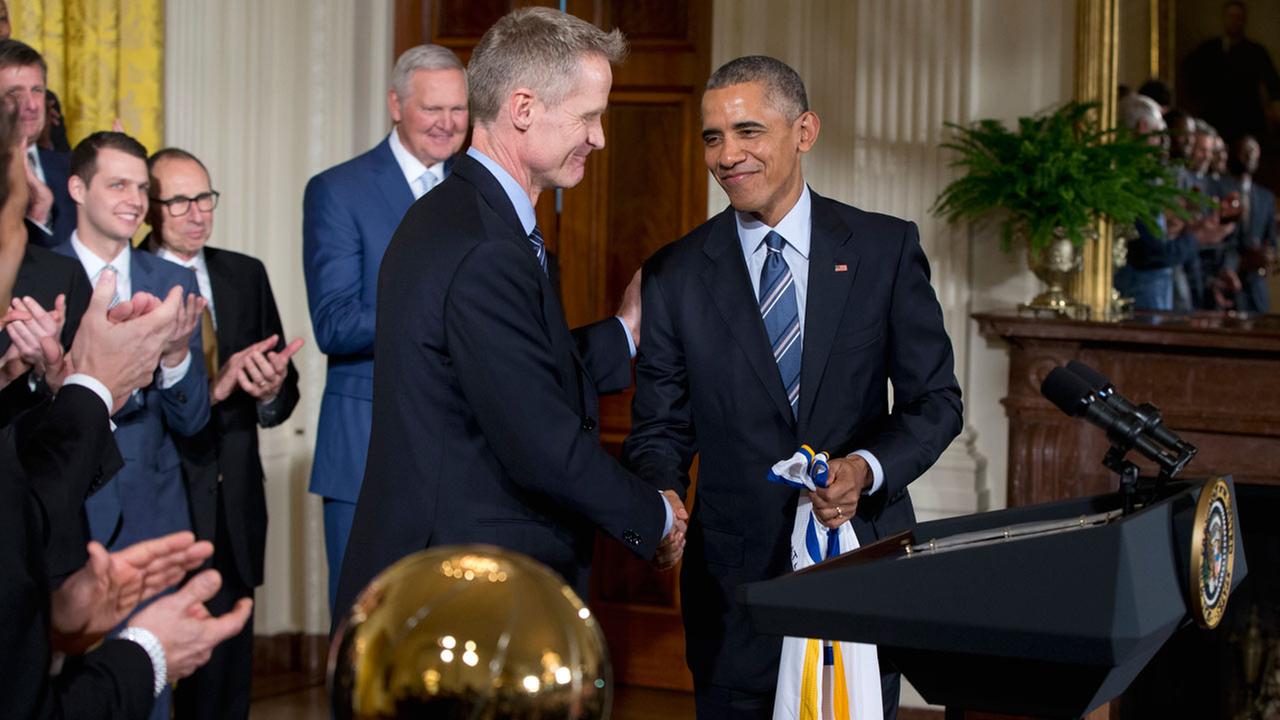
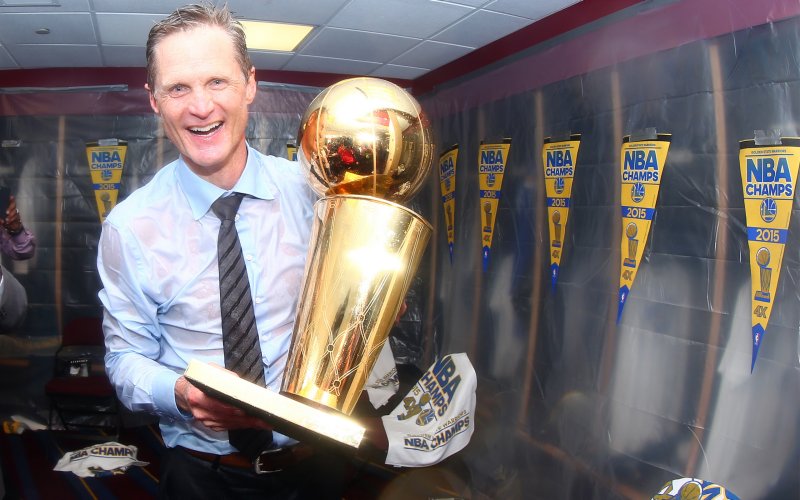
A Coach, an Oscar, and the Children We Must Remember—Thank you Steve Kerr

I remember when Oscar parties rivaled the very best Super Bowl gatherings. Friends would dress up as their favorite actors, and the food went far beyond the usual party fare. Drinks and dishes were cleverly inspired by the nominees for Best Picture, Best Director, and more. In fact, my colleagues and I often used the Academy Awards as a cultural touchstone in the classroom—a shared experience that connected students to the broader world of film and storytelling. Times have changed.


I asked my class if anyone tuned in and all of two seniors raised their hands. I admitted that I too missed out. I didn't see most of the movies and I didn't even know much about who or what was up for best of anything. That is until I found out that Steve Kerr, the head coach of the Golden State Warriors won an Oscar.

As written on ESPN,

Kerr was one of the executive producers for "All the Empty Rooms," which won the Oscar for documentary short.

The 35-minute film chronicles how broadcast journalist Steve Hartman and photographer Lou Bopp told the stories of families who have memorialized the bedrooms of children killed in mass shootings. Kerr -- whose father, then the president of American University in Beirut, was shot and killed in 1984 -- has long spoken out about a need for common-sense gun regulation.

"I didn't have anything to do with the making of the film," Kerr said Monday. "But I am very proud to be associated with it."

"They called me about a year ago and asked if I would like to be an executive producer, which meant basically put my name on it and help promote it," Kerr said. And then after watching the film, I was just blown away by how beautiful it was and poignant it was. It was an easy decision."

I don't know if I would have heard about this film if it were not for sports and my love of Coach Kerr, but I am grateful I did.


I told my students about the short film and how I came to find out about it. Thank you, to KNBR—my morning sports talk radio station. I admitted that I didn't know if I was going to watch "All the Empty Rooms." I didn't know if I could. I wish had for I would have shared some of why I think it's important for them and for all of America to see. 

Steve Hartman was first assigned to report on a school shooting in 1997. Since he began, school shootings have increased from 17 to 132 per year. 

In the 33 minute film (available on Netflix), he said,  

for years I had been doing essays at the end of every school shooting week. Maybe it was a hero or the country coming together. Whatever it was, they were looking for some kind of positive message.  
I did so many of these essays that I felt like I was repeating myself. In fact, I was using the same lines in the stories. And I saw that America was moving on from each school shooting"quicker and quicker every time. 
I recalled  some of the tropes I have heard in times of tragedy. "Everything happens for a reason" or thinking back to law of attraction as promised by "The Secret" According to that best seller, your thoughts attract corresponding outcomes—positive thoughts supposedly bring positive experiences, while negative thoughts attract negative ones. Those ring hollow. I recommend "The Book of Job" instead.

I burst into tears in under one minute of viewing this film. I listened in total awe of the parents recalling memories of their children. I looked is sadness as they welcomed Hartman and Bopp into the sacred space of their late son or daughter's room. Hartman and Bopp navigate that journey with utter grace. 

Hartman caught my attention when he suggested that the media may bear some of the responsibility. He said, "I feel like the media is to blame a little bit for some of this. Or, at least its worth exploring. In the beginning, especially, it was just so overdone. And, the shooters were mentioned way too much. What we need to talk about is the child who is not here anymore." And there you have it. The name of this short film and the reason why it's so moving.

He said, "I wish we could transport all Americans to stand in one of those bedrooms for just a few minutes. We'd be a different America." 

Hartman speaks about solidarity. So does Greg Boyle, SJ—the founder of Homeboy Industries. Father Boyle has said that "nothing stops a bullet like a job." He's right. And maybe a bedroom could too.

His concludes with the message: 

I want the project to remind people that these were our children.

I want the project to remind people that these were your children.

These could be your children.

Thank you Steve Hartman and Lou Bopp. And thank you Steve Kerr, for your support of "All the Empty Rooms." That was your father. I don't need to see his room—or rather, his classroom. It is one you have already shown us. 

Photo Credits
Hair Ties

Tuesday, October 22, 2024

Cell Phone Policy: At School and Even in an NBA Locker Room

One of the more noticeable changes of the 2024-2025 school year is the cell phone policy. Like so many schools throughout the country, we took a proactive stance this year—requiring students to either place their phone in a caddy in the classroom or keep it in their backpack. Many teachers feared students would leave "burner" phones. Others worried that placing and picking up phones would diminish class time. However, I am happy to report students have readily complied with the new practice and expectations. Teenagers are still actively messaging on their iPads or laptops. Some abuse the policy by "going to the bathroom." This basic request is all too often a euphemism for "I need time to send and read text messages." Furthermore, the minute the bell rings, students either get out their phones or retrieve them from the caddy and log in and on. Too many are walking zombies. Who have we become? What have we become? I would like to suggest this is NOT just a question for teachers and students. In fact, it's worth considering as a nation and a society.

In Sports and Spirituality, I spend the first week establishing class norms, unpacking the syllabus, outlining expectations and listing the goals of the course. I do what I can to frame all of this as it relates to our classroom and the world at large. For example, the syllabus mentions that the classroom is a cell phone free zone. I explain why it is important that both phones and iPads are not out or open until instructed otherwise. If a student needs to use their phone, they should do so outside of the classroom and in the hallway. However, they need to be in their seat when the bell rings. Any student who is not in their seat when the bell rings is considered tardy. 

School bell or not—being on time is important. Athletics speaks to this principle all the time and as written in NFL players often forget Rule No. 1: Show up on time, athletes struggle with it too. It says, "Back before he won the Super Bowls and was known more for his rules than his rings, Tom Coughlin had one directive that sounded so extreme, it was borderline comical: If you weren't five minutes early for a team meeting, you were late." Furthermore, if you're late for a team meeting you can be fined. In jest, I ask if I should employ this policy in class, too. And to whom should I donate the money—St. Anthony's foundation? This rule in associated with many others which carry a financial consequence agreed to through the CBA (Collective Bargaining Agreement). Professional athletes are just that: professionals. They are paid handsomely to do their job, but they are fined heavily when they don't. 

For those students who find rules to be tedious or the school handbook too scrupulous, I mention that the late great John Wooden of UCLA basketball fame had but three rules.

  1. Be on time.
  2. Never criticize a teammate.
  3. Not one word of profanity.
I wish I had but three, but I don't. Perhaps the Pyramid of Success was Wooden's way around three rules. Maybe less really is more. I see this work of genius as a different approach to establishing the necessary rules for his team—for any team! However, Coach Wooden never had to deal with cell phones. I have to wonder, were he coaching today, Which building blocks might address how to use technology properly? And given that college players are now paid quite handsomely, perhaps this report The Right Call: What Sports Teach Us About Work and Life by Sally Jenkins may speak to what has become a semi-similar audience.

In the chapter entitled, Discipline: The Framework
Jenkins writes,
Too many times to count, NBA coach Doc Rivers has seen cell phones get in the way of winning. Rivers tries to discourage players from checking statistics on their phones at halftime, because he doesn’t want them fixated on personal scoring. If a guy knows he shot 1-10 in the first half, it “might affect his play in the second half; make him overaggressive or, worse, hesitant, and either way ruin the team’s flow. Nevertheless, often when Rivers walks into the locker room to address his team at the break, what does he see? A lot of bent heads. Guys are staring down at the devices in their hands, checking their stats online. Not only that, they’re reading texts and tweets about their stats. 
What is Rivers supposed to do? Ban all cell phones? Bench the worst offenders? 

Rivers has an aura of authority. He’s six-foot-four, the son of a cop, with a voice like truck wheels on gravel. He’s spent forty years in the NBA, first as a player and then as a winning head coach of four different franchises across the league. He led the Boston Celtics to an NBA title in 2008, set a franchise record for victories with the LA Clippers in 2014, and in 2020–2021 he turned the Philadelphia 76ers into a contender for the first time in 20 years. 
Rivers’s no-stats philosophy was formed as a player, an All-Star for the Atlanta Hawks in the late 1980s. One night, Rivers went off for thirty-seven points. With two minutes left he had the team up by twenty, and he motioned to the sideline that he wanted to come out of the game and let a younger player clean up and get some experience. But his coach Bob Weiss wanted to leave him in. 

“You have a chance to get your career high,” Weiss said. Rivers thought about it for a moment, and replied, “So what?” 

Rivers fervently believes a player is better off not focusing on scoring, but on the elements that lead to teamwork, such as disciplined movement without the ball and sound defense. “If I had thirty-nine, I was going to be a better person?” Rivers asked rhetorically, telling the story years later. “To me, you do your job, and wherever you stop doing it, you stop doing it for the right reasons.”
Smartphones threaten to get in the way of those precepts. They are chock-full of distracting and mentally distorting material. Guys pick up their phones to check their numbers, and see a message from their agents telling them what they should do, as opposed to what their team needs them to do. Rivers calls the devices the Bad News Phones. He tells his assistant coaches, “Whatever news they’re getting on the phone, it’s not in our favor.” 

“No one on those phones is telling them, ‘You should pass more,’” Rivers has observed. 
“No one is telling them the reason they’re not playing more is they don’t play defense hard enough.” 

But what is Rivers supposed to do about it? How is Rivers supposed to make players who “are seven feet tall and 280 pounds do anything they don’t want to do?" Even if Rivers could find an effective way to enforce the rule, it would likely be self-defeating, breeding buried resentment or resistance in his players, most of whom are grown men, some of them with children, and whose strong self-will Rivers prizes. 

At the end of the 2020 season, Rivers compared notes on the issue with Golden State Warriors head coach Steve Kerr, during The Ringer network’s podcast series Flying Coach, in which bench leaders talk tradecraft. Kerr encountered the same cell phone–social media issue in his Golden State Warriors locker room. It was a daily challenge to secure the undivided concentration of young players for whom reaching for electronic devices had become a reflex. 
“It’s interesting because you have to decide as a coach in the modern era, am I going to be the coach that says no phones?” Kerr said. “Am”“I going to be that guy? Like, the old-school guy: Hey! No phones!” 

The answer to the question in the case of Rivers and Kerr was no—they weren’t going to be that guy. “It’s just not realistic,” Kerr said. “I don’t think it would work these days.” Both men believed any coach who tried strong-arm attempts at enforcement would wind up with a roomful of malcontents, or doormats. Instead, they searched for ways to handle the problem with light suggestion or sarcasm. On one occasion Rivers walked into a locker room, saw a player jabbing at his phone, and cracked to him, “Tell her I said, ‘Hi.’ ” The teasing remark made it clear the texting was an intrusion, but it left self-determination intact. A murmur of laughter ran around the room, and players put their phones down—for once. 

That even the most authoritative coaches in the NBA struggle over whether to forbid social “media in their locker rooms says something important about discipline: it’s a perplexing subject and instilling it is tremendously difficult. There may be no concept more misunderstood, misconstrued, or misapplied by poor leaders, some of whom interpret it as strictness, to be imposed on others with penalty, punishment, or spittle-flying harangue. Only to find out that they’ve lost the room. Disney chairman Bob Iger observes, “Using the word is very dangerous in terms of how you treat or manage people.” 

Discipline is of course essential to good decision-making. Without it, a leader is left to sift through unreliable factors and behaviors in making choices, and the result is haphazardness, the quickest way to sabotage any endeavor. With shared discipline, uniform standards are set.

There is much to consider in from this real life report. It prompts questions we have already been considering such as To what degree do cell phones get in the way of winning? of community building?! Do Smartphones get in the way of precepts like personal records and stats are antithetical to the game? And what are the messages we are getting from our cell phones? 

I enjoyed hearing my students weigh in on matters like, Do you think Coach Rivers and Kerr made the right decision? How can athletes exercise discipline in the locker room or during down time? What uniform standards net to be set in and around shared discipline for your team? in your school? 

These are the very questions we must not only entertain but consider for ourselves to learn and love one another this school year. Putting the cell phone in the caddy or away in the backpack is just one small step in the right direction. While many thought it might not be possible, by and large it's been met with little resistance and hopefully more respect for how we interact and communicate with one another. Stay tuned... (do students know what that might mean?!)

— The Right Call: What Sports Teach Us About Work and Life by Sally Jenkins
https://a.co/fcDuxSK

Tuesday, November 28, 2023

What we see and don't see: Lessons Learned from a Coach Kerr's Clipboard

Have you ever had front row seats? Have you ever sat court side for a game? I think the closest I've ever sat to the stage was in the second row for a George Strait concert or five people deep in the pit of a Springsteen show. I love, let me underscore, love being so up and close and personal. It's as though you're consumed by the sight, the energy and the intensity of what lies in front of your own eyes. But yesterday, I was reminded sometimes, you have a better vantage from the back. Sometimes, you can see more from afar. It's also possible that when you look at what's in front of you, you lose sight of what's behind or in back of you—both literally and metaphorically. 
Oakland Coliseum, 2013
For the past two days, I have been teaching in a classroom that is not my own. The teacher assembles her desks differently than I do and as I sat in her desk—located in the back room—I realized that though students don't see you, you see them...and everything they do. From this perch, I was reminded that perspective changes everything.

In the same classroom, I picked up the clipboard that the TA uses to take attendance. While I should have focused on the roster clipped to the front, I was more interested in the message taped on its back: Ten Rules for Sportsmanship. And, as someone who uses a clipboard for both teaching and coaching, I thought about my own clip board—and the messages I send—again, literally and metaphorically—from it.
Coaching XC. Crystal Springs. Love this memory and runner!
The clipboard helps me do what I do, for the benefit of my students or athletes. I use it to get to the information I need, the notes I want to review, the work out plan and more. My audience only sees me looking at what I will use for them, but I started to wonder what else do they see when I use it. 

I believe an important question for every teacher and coach to pose it what messages are we sending both directly and indirectly to those who sit in front of us. What else are they learning, doing, achieving and striving toward when we stand in front, beside or behind them?

I realized that Steve Kerr's clipboard says a lot. Whether it's chipped, broken or complete, he is always giving his players a message. That's just one reason he was awarded Coach of the Year in 2015.

One of my favorite stories from the Warriors 73 win season was told by the unanimous MVP Steph Curry about Coach Kerr and his clipboard. With the team up by but a few points late in the third quarter of a game against the Sacramento Kings, Kerr called a timeout. 
The team did not execute the play as practiced and in the process of explaining how the team failed, Kerr broke his clipboard. Curry admits he had a hard time holding back his laughter. "Here we were, the number one team in the league and Coach Kerr is coaching this game like it's the NBA Finals." With or without his clipboard, no one questions how much Steve Kerr cares. His became material for the Warriors "silly fines kitty," as written in the article "Joy Ride: On the Road with the Warriors." 
  • Kerr breaking only a small corner off his clipboard during a halftime rant in January. "Kind of weak-ass break," Green says. "At least break it in half." Kerr: "It was defective!" (Fine: TBD)
No doubt Kerr sent a message in breaking his clipboard. And his team sent one right back in "catching another Dub committing a Silly Fine for which he must contribute between $250 and $500 to the kitty. When the kitty gets big enough, there’s a half-court shooting contest. Winner takes all. Everybody gets a chance—equipment guys, trainers, even reporters. Except for Curry, who recuses himself. Unless everyone else misses."

Maybe coaches and teachers ought to start their own kitty....

We should consider what messages we are sending verbally, in writing, and by our example. Whether it's the clipboard we carry, the place where we sit or the spot where we stand, cognizance, awareness and appreciation of what our students and athletes see and don't see is worth pursuing. Ask them. Invite their responses. Inquire about their perspective. Break the clipboard if you have to....it shows that you care.

NB: I started this post on 7/18/16 and never finished it. There was some great material here. Had to finish the job!

Photo Credits
The Boss
Steve Kerr

Tuesday, November 8, 2016

Thoughts on a Coach for President of the United States

For much of the past two years when the question about voting for President of the United States came into the conversation, I found myself redirecting the topic toward sports. I would tell folks that I was considering writing in the name of Steve Kerr as my candidate of choice. Though largely joking about believing an NBA coach ought to serve as our commander in chief, the more I thought about the qualities that make Kerr an excellent leader, the more I almost started to believe...well, maybe I was on to something. A recent article in the San Francisco Chronicle "Warriors' Steve Kerr is Presidential Material," confirmed my suspicion and yet it helped me realize something more....that you need not be female to understand. Before you continue reading, I recommend reading this piece linked above.
Kerr is extremely likable. And if there's one thing I know about Americans, it's that they want, and almost need to like their President. No wonder this year has been such a challenge. Kerr has an incredibly personal story—from his family background to his self-made career that began at Arizona, continued with the historic Chicago Bulls, extended beyond the broadcast booth onto the hardwood at Oracle Arena, where he now leads the Golden State Warriors. Moreover, it's no secret that Coach Kerr surrounds himself with good people. He is an excellent communicator, known to go the distance (literally, not just metaphorically) to help those in his care understand how important they are. I love his four tenants of coaching and that square jawline— does that account for much?

So, it should be no surprise that when one of my favorite sports writers, Scott Ostler mused about Kerr in the same way I have, I took notice. Ostler got all of San Francisco to start thinking in a fun and playful way about some of our favorite leaders. These men are on the front lines night after night, so naturally, we evaluate their skill set....the way they inspire...we praise them for the great decisions they make and ridicule them for those they don't. Coaches invite us to consider different styles of leadership, they prove that preparation is paramount and we have to come to grips with the fact that some want it more...while others have the ability to transform a group to something much greater than the sum of its parts. Many invite magnanimity and encourage us to do the same.  
I excitedly shared his words in my Sports and Spirituality class with my seniors, half of whom are able to vote. I asked them to respond and react, hoping they might enjoy his insights, "get" his humor and yet catch a glaring oversight. With their silence, I realized that another teachable moment came to be. 

Ostler knows his sports, sports personalities and he writes well, but I find it unfortunate (if not unforgivable) that he failed to name a single female coach—or with a nod to Stephen A. Smith—reference a female announcer. One student shrewdly replied that the now deceased Pat Summit would have been a logical choice. I concur. And though it may be difficult to rally around a stoic personality like Stanford women's basketball coach, Tara VanDerveer, it's not a stretch to cite a woman like Muffet McGraw. 

Yes, I have an equally unforgivable Notre Dame bias, but she is also the winningest coach in all of ND sports. Considering that football, built, sustained and the school and that women have comprised the student body for just a little over 40 years, that is quite an accomplishment. Did I mention she has over 700 wins?  Or, if college women's basketball is a stretch, the long-standing and highly respected Hannah Storm is a worthy nominee. In reality, I don't need Hannah for President...I love having her on SportsCenter where she is a great stateswoman and orator for athletics. Regardless, history was made when the Democratic nominee for President was for the first time in the history of this country, a woman—a mother, a grandmother, a wife and a bit of an athlete herself (Hillary played baseball and was a swimmer). It's time that we have more female leaders and that's not just in politics...but in coaching as well.
I know at the school where I teach, all but three of our girls' varsity sports have a male head coach. As the salaries for women's coaching positions at the collegiate level increased, so did the number of male applicants for those positions. One of the winningest coaches in female athletics, Geno Auriemma also served as the head coach of the USA women's basketball team for the Rio Games. He had one male assistant and two female assistant coaches. No woman, however, served on the men's basketball Olympic team staff.

The way I see things, we need to continue to encourage girls to not only play sports but seek leadership positions in sports and beyond sports.

The Case of Athletes in Office states that "women make up more than 50% of the population but only 19% of Congress, and according to a number of studies cited in a recent story in The New York Times, a large part of that disparity occurs because women are far less likely to run. An exception is emerging however: athletics. A 2013 study from the Women & Politics Institute found that women who played sports were 25% more likely to express political aspirations than those who did not. 
I'm sure Scott Ostler he was just having fun with a timely topic. After all, we love our coaches and we should. I credit that future Hall of Fame manager Bruce Bochy as a key reason—if not THE reason—that there are three World Series trophies in San Francisco. His leadership forever changed the narrative of Giants baseball and colored some of my most cherished of memories with family, friends and my students. I hope he never pays for a drink or a meal as long as he lives in the Bay Area....and I'll throw Steve Kerr in that mix too. I just wonder if there could ever be a time that I could rally around a female leader with that same enthusiasm and gratitude. For many Americans, tomorrow may be the day....

Thank you Lord, for the ability to use our voice and exercise a great freedom: the right to vote. We pray for a safe and peaceful transition of power. Bless our leaders—those who serve and feel called to do so on the local, state and national level. In our schools—with students and athletes too.

Photo Credits
with 44
Trophy
McGraw

Friday, February 26, 2016

Assist of the Game: Remembering Father Ted One Year Later

Given their stellar record, it's hard to get tickets to a Golden State Warriors game this season. However, if you do, there is so much—maybe too much—to take in.  On the one year anniversary of the death Father Ted Hesburgh, CSC, former president of the University of Notre Dame, I would like to call attention to something all of those lucky enough to be inside Oracle Arena might see. It reminds me of Father Ted.


Ask Warrior fans what they love about the live experience and you might hear them talk about the ardent energy from start to finish or the opportunity to see just how big and strong these athletes are "en vivo." Perhaps you love the pregame ritual. For some reason, I just can't get enough of that jig, that dance that the team performs after the starting five have been called out. (In fact, I like it so much, I continually look for it on YouTube. This is the best we can do...for now). Many enjoy calling the name of head coach "Steve Kerr!" in unison. There is much to appreciate in person that you just won't get from watching the game on television. And one tradition, that I noticed for the first time this season is worth implementing at every NBA, and NCAA basketball game: Assist of the game.


The assist is the most selfless of all statistics in basketball, An invaluable offensive maneuver, according to NBA.com, the assist 
is a pass that directly leads to a basket. This can be a pass to the low post that leads to a direct score, a long pass for a layup, a fast break pass to a teammate for a layup, and/or a pass that results in an open perimeter shot for a teammate. In basketball, an assist is awarded only if, in the judgment of the statistician, the last player's pass contributed directly to a made basket. An assist can be awarded for a basket scored after the ball has been dribbled if the player's pass led to the field goal being made. A great passer must have an understanding of his teammates' abilities, outstanding ball-handling skills, court vision and the ability to see plays develop before they occur. 
I think it's also worth noting that "the recorded of assists in a single D1 game is 22, held by Sherman Douglas of Syracuse. Avery Johnson of Souther and Tony Fairley of Charleston Southern. Duke's Bobby Hurley holds the career record with 1,076.  In the NBA, Rajon Rondo's leads the league with 12.0 assists per game.
Fans love playmakers, especially those who drain the three...who put up the mid-range jumper....who slam the dunk. But those buckets, buckets and mo' buckets are largely made possible by someone who has the vision to see the open teammate. The assist is a result of a player who looks maybe less for personal glory and more for a collective one. 
 
Draymond Green leads the Warriors in assists this season. Second to him? The guy putting up the shot, Steph Curry
Yes, the Warriors have the greatest back court in the NBA but they are also an organization who has decided to identify what they consider to be the "assist of the game." It is shown on the electronic scoreboard late in the fourth quarter. I think it's an invaluable addition; whatever we can do to recognize those who make something possible is worth doing. I love that the late Dean Smith instilled this value into his players by a simple ritual. Anytime a player made a basket, they had to point to their teammate who gave them the assist. This exercise is a simple way to remind ourselves that what we achieve is made possible with the hands of others (And hockey does a better job of this! Two players—can get a stat for the assist if there are multiple passes).

And I write about this selfless stat and this important ritual, because today, as I have many times, I point my finger in salute to the late Father Hesburgh. He made co-education at my alma mater possible. Without his efforts, I don't know that I would have been able to attend Notre Dame. The fact that women were admitted just twenty years prior to my entrance isn't something I take for granted. I don't think I should. I realize that the only ND I know, is a co-ed one, but it wasn't always that way. Father Ted believed women made Notre Dame better. I wrote about that in my tribute last year: Remembering Father Ted Hesburgh for a Lifelong Assist.
This is what Coach Smith had his players do. I would like to think the program has continued that tradition.
With that, I would like to conclude with Father Ted's own words, that were included in the Daily Gospel Reflection by Faith ND. And "thank you" for something much more than an "assist of the game," thank you for the lifelong assist. Pax et requiem. 

There's only one way to do it—that is to put yourself in the hands of the Holy Spirit and the Blessed Mother. You will see heartbreaks as well as days of great joy. There will be a celebration as well as days of mourning in this Church. But with the Holy Spirit behind you and the Holy Mother inspiring you, these will be great years.
***
In prayer and meditation, we can find the tranquility and the transforming power of the presence of God. Union with God is, ultimately, the only basis on which our community with others can rest.
***
Just this week one of our students asked me a very difficult question: “How do you know God, how do you perceive him, contact him, relate to him?” I told him that God, for me, was Christ incarnate, fully God, fully man, joining in his person God and man, the hopes, the desires, the hunger of man with the transcendence of God. And when Christ left us, he promised us the Holy Spirit to abide with us, to guide us, to give us what we find as the recurring theme of St. John’s Gospel: life and light—light to guide us and life to live divinely. Nothing less is needed to find our way out of the labyrinth of human problems today—with the light of divine guidance.
***
I pray every day to the Holy Spirit, as my friend, to give me the light and strength to do the right thing. And the Holy Spirit has never failed to show me the way and to give me the strength of purpose to struggle on in the face of all kinds of adversity.

The Holy Spirit is the light and strength of my life, for which I am eternally grateful. My best daily prayer, apart from the Mass and breviary, continues to be simply, 'Come, Holy Spirit.' No better prayer, no better results: much light and much strength.

Our Prayer: Loving and merciful God, you bestowed upon Father Theodore Hesburgh, CSC, a great intellect and a compassionate heart, and he used it to strengthen the University and mend the world. As a priest and as a leader, he lifted up the lowly and proclaimed the greatness of the Lord in all things. We are grateful because our lives have been touched by his hope and faithfulness; we are thankful to have witnessed and shared his life’s work to love God and humanity. With him, we “ask again and again for wisdom and courage, the light to see and the strength to do what the times demand and the richness of our heritage promises.” May Father Ted now enjoy eternal life with you, resting in the peace of your Son, Jesus Christ. Amen.

Monday, January 25, 2016

Welcome Back Coach Kerr

Perhaps you remember the 2004 comedic drama "Sideways." IMDB gives an appropriate summary:
Miles is a failed writer living a meager existence in San Diego as an English teacher. With his career seemingly fading and the fate of a book hinging on a publisher's decision, Miles is depressed with himself and what he hasn't achieved. Jack is a television actor whom some recognize but not many do, as if he were a minor actor who got a taste of success. With his best friend Miles, the two embark on a road trip through California's wine country. Miles wants to give his friend a nice sendoff before married life, while Jack simply wants to have a fling beforehand. As they're both nearing middle age with not much to show for it, the two will explore the vineyards while ultimately searching for their identities.
The viewer can't help but wonder if Jack really could or  should commit to anyone or anything . Sitting in a restaurant, he turns to Miles (Paul Giamatti) and shares a thought that made me laugh out loud. Jack said, "Speak for yourself. I get chicks lookin' at me all the time. All ages. Dudes too."
It might be inappropriate, but sitting in Oracle Arena for the long-awaited return of Warriors head Coach Steve Kerr on Friday night,  I couldn't help but think of that line. Male or female, single or married, gay or straight—it's hard not to have feelings for Coach Kerr. And that was more than evident in his first game since the championship game he coached and won on June 16, 2015

I have never seen so many fans in their seats for the starting line-up as I did on Friday night. Quite often, they linger in one of the in house, club areas (myself included); they was nearly vacant long before tip off.

Greeted by a full house and a standing ovation, the welcome back loomed long and loud. Warriors faithful were ready and willing to extend their gratitude to a man who make the team's first championship in 40 years a reality. But given the success of interim coach Luke Walton, 39-4, the second-best record through 43 games in NBA history, 
I think it's only fair to raise the question: To what degree is Kerr responsible for the success of the Golden State Warriors. 

I don't know that I am prepared to answer that question like others can, but I do believe that the success of any team or program is never contingent on one person. And with regard to the Warriors, it's not hard to see from the top down, this is an organization that is doing things right.  

The owners have a made a noticeable commitment to winning. For example, seeing Joe Lacob and Peter Guber at court side seats as opposed to a perch known as the "owners box" speaks to me. Furthermore, even with Kerr at the helm, it's interesting to see just how many people comprise the Basketball Operations of any pro squad. As listed on the Warriors website,  today's team is supported by a General Manager and two assistants, three assistant coaches, two player development coaches and the list goes on. But leadership isn't only in the front office or limited to those in suits. Even among the players, certain athletes are named captain. For the 2014-2015 season, Stephen Curry and Andre Igoudala served in this honorary role. Their performance in the NBA finals reflected why that choice was a good one.


Yet, even in their absence Coach Kerr made his impression as only he can and he should. As written by Monte Poole in "Kerr's fingerprints on 'everything' for Warriors, it's valuable to consider
With the Warriors on the precipice of making history – becoming the first team to win its first 16 games – Kerr sensed they might be a bit on edge. So he restated the four tenets he instilled upon taking over 18 months ago. 
“The first one, and the most important one, is joy,” interim coach Luke Walton said, recalling the morning session. “He wants us having fun. It’s a long season. This game is meant to be fun. So there’s joy. There’s mindfulness. There’s compassion for each other and for the game of basketball, and then there’s competition.
Coach Steve Kerr has built a team that is built on cornerstones of joy, mindfulness, compassion and competition. No wonder we have feelings for him. I believe if I live my own life following those tenets, I too will find excellence.

Welcome back, Coach.

Photo Credits
Coach Kerr
Owners Win Too
Kerr and Walton

Sunday, December 13, 2015

Warriors 24-1: Why The Streak Still Matters

On Tuesday November 24, 2015 the Warriors made history when they beat the LA Lakers 111-77. Never before had a team opened the season with 16 straight wins, besting the previous mark of 15-0 set by the 1948-49 Washington Capitols and 1993-94 Houston Rockets. With each new opponent thereafter, the next goal—to beat the '71-'72 Lakers' streak of 33 games—creeped closer. And with each additional win, the team's confidence grew. The fans' did too. Heading out on a 7-game road trip, this team that was once mediocre at best, gave folks pause to wonder: Will they ever lose? A few had the audacity to write 82-0. Today, the Warrior faithful responded to the 108-95 loss to the Milwaukee Bucks by writing 81-1. I like it.
But, I have to admit, there was a little less spring in our step this morning. The heads of Warriors fans hung low for the first time in a long time. They shouldn't. The streak was a wonderful and exciting thing. Many times I thought to myself: it doesn't matter. Or does it?

If it hadn't been for an interview with Pat McCaskey for SportsUp Today, I don't know that I would understand just how much something like a streak can and does matter. That's because McCaskey taught me what his grandfather, George S. Halas, Sr., the founder of the Chicago Bears football team believed to be true. He said "the mission and purpose of the Bears football franchise win championships and help other people."


Many sports fans, athletes and coaches might not recognize that one leads to the other. As the Senior Director of special projects and a board member for the Bears, McCaskey does. He said “our community work would have more credibility if we had more championships.”

The Golden State Warriors are in an incredibly powerful position. Their social status and professional credibility couldn't be higher. If Steve Kerr decided to run for mayor of San Francisco AND of Oakland, I think people might elect him and paint the Bay Bridge blue and gold in the process.  A local cause or organization that calls on the Warriors team, or individual players will be met with a great platform to tell their story. They will find the media ready and able to give great exposure. People who might not otherwise care, show up to help or to give. 

Perhaps you are questioning McCaskey's conviction. As a counterpoint, I think of the Philadelphia 76ers. This team started the season 0-18. They had already set a record for the longest losing streak in the history of the NBA, with 28 defeats stretching over last season and the current campaign. Their streak came to an end on December 1 when they beat the Lakers.

It's hard for me to imagine a Philly based non-profit calling on the Sixers to promote their cause. Good, bad or otherwise, they probably would not want to be associated with an organization that can't compete. It's hard to get excited about a group that failed to put up a "W" in the win column for over three months time. Those in the Sixers front office ought to heed McCaskey's words of wisdom. Rather than aim to win championships, start with winning games. Don't worry about beating a 24-game win streak, try winning three in a row. You'll have a little more credibility...assuming you still have any. Philly is tough. 

According to Warriors interim coach, Luke Walton, "I bet there’ll a little bit of relief mentally going forward from this point on. It was a lot of fun.”And it was. And so is winning championships and helping people. Warriors, keep playing like you are, and you will. And, we're grateful for the fact you've already done both.

Photo Credits
Strength in Numbers

Philly finally wins