Showing posts sorted by relevance for query Laetare. Sort by date Show all posts

Friday, May 22, 2015

The Voice of an Angel: Aaron Neville

Ask members of the class of 1996, their friends and family who served as graduation speaker at the 151st Commencement exercises at the University of Notre Dame and more than half will probably mention a peppery Cajun sister. Our Commencement speaker was a woman—Mary Ann Glendon, but the speaker who stole the show was the recipient of the Laetare Medal, Helen Prejean, CSJ. An activist and author, Sister Helen urged us to be the change we wish to see in the world.
Aaron Neville has a tremendous devotion to St. Jude.
He wears a medal of the saint on his earrings. #awesome

I have a feeling that if—19 years from now you ask a member of the Class of 2015 who their speaker was, they might do the same. While the Commencement speaker was the chancellor of Oxford University, Christopher Patten, this year's Laetare recipient was four time-Grammy Award-winning singer and musician, Aaron Neville. That's right, Aaron Neville of the melodious, rockin' Neville Brothers.


As written for Notre Dame news, “Aaron Neville proudly embraces and honors his faith through his God-given musical talents,” said Notre Dame’s president, Rev. John I. Jenkins, C.S.C. “Through tumultuous times in his life, Aaron turned to God, the Blessed Virgin Mary and St. Jude for strength, forgiveness, and salvation. His example of repentance and devotion shine brightly for all who see him perform.”
The Laetare (pronounced Lay-TAH-ray) Medal is so named because its recipient is announced each year in celebration of Laetare Sunday, the fourth Sunday in Lent on the Church calendar. “Laetare,” the Latin word for “rejoice,” is the first word in the entrance antiphon of the Mass that Sunday, which ritually anticipates the celebration of Easter. The medal bears the Latin inscription, “Magna est veritas et prevalebit” (“Truth is mighty, and it shall prevail”).
Next time you are in the basement of the Main Building...
Established at Notre Dame in 1883, the Laetare Medal was conceived as an American counterpart of the Golden Rose, a papal honor that antedates the 11th century. As I wrote in "Why Coach K Should Win the Laetare Medal" "This award recognizes outstanding service of a person or group to the Church and society; their genius has ennobled the arts and sciences, illustrated the ideals of the church and enriched the heritage of humanity. A committee must decide among several nominees and the winner is announced on Laetare Sunday (the fourth Sunday of Lent).  And I learned recently that every year, someone nominates Duke men's basketball coach Mike Krzyzewski."
 This year might have been an appropriate one for that distinction, but given Neville's response, I can't think of a greater gift for a graduating class, their families, and the alumni community. How so? I have noticed that not a lot captures the attention of teenagers at our all-school mass. But there's always one thing that does. When a student sings as prayer. 

When this happens, and our liturgist teaches and models how students can do this, it's captivating. It's prayer in its highest form (or prayer twice as Aquinas might say). When that's accented by someone who has "the voice of an angel," it's that much deeper, richer and sweeter. Aaron Neville is no exception.

Granted this context is different, but the community's response is no different. Neville says little but leaves much for the graduates. To hear him sing "Ave Maria" is something I want to pray with and remember. I encourage you to watch the link above to see/hear it.

When I was on campus in February, I came across a public commemoration of the Laetare Medal. In the basement of the Main Building stands an impressive ambo that features the likeness of the medal, its significance and a book that profiles each recipient. The stories of the lives it includes is tremendous. From Dorothy Day, to Martin Sheen, jazz composer Dave Brubeck and even the former captain of the men's basketball team—Rev John P Smyth. He dedicated his life in service to the poor of Chicago. What I love about this award is a simple fact that anyone can glorify God by using the unique gifts and talents they have been given.

I'm grateful that this year's honoree has done that in a way that speaks to me—music and prayer....one in the same.

Photo Credits
Aaron Neville's Instagram account
I took to photo of the Laetare Ambo and page
YouTube video 

Saturday, May 18, 2013

Why Coach K Should Receive the Laetare Medal


The University of Notre Dame’s 168th Commencement Ceremony will take place on May 19, 2013 in Notre Dame Stadium.  Among the pomp and circumstance, addresses and honorary degrees is an award that is considered the oldest and most prestigious award given to American Catholics--the Laetare Medal.  This award recognizes outstanding service of a person or group to the Church and society; their genius has ennobled the arts and sciences, illustrated the ideals of the church and enriched the heritage of humanity. A committee must decide among several nominees and the winner is announced on Laetare Sunday (the third Sunday of Lent).  And I learned recently that every year, someone nominates Duke men's basketball coach Mike Krzyzewski.
Looking at the impressive list of past recipients--Dorothy Day, Sarge Shriver, Sister Helen Prejean and even Martin Sheen, one might ask how or why Coach K should be considered. Thanks to a conversation with Duke basketball manager, Scott Lamson I know why.

As the sports editor for Genesis, the alumni magazine of St. Ignatius College Prep in San Francisco, I am privy to talking to our alumni about what they do with their lives, opportunities they have had and lessons they have learned.  Many of these conversations have revealed a simple but uplifting truth: dreams do come true.  And that is exactly why I decided to get in touch with SI alum, Scott Lamson.

As reported in the most recent issue

Lamson first dreamt of attending Duke University when, at 8, he saw the men’s basketball team win the 2001 national championship.  He hoped to study at Duke and join the Blue Devil team coached by Coach Michael Krzyzewksi. 
While most 8 year olds may dream like this for a few years, Lamson stayed faithful to his vision.  He found his way onto the hardwood of Cameron Stadium when he landed the job as manager of the men’s varsity basketball team during the fall of his freshman year.   
“When I shared my dream with my sister Kiristie, she told me she could see me at Duke.  Because of her encouragement, I sought out SI.  I knew it was one of the best schools in the Bay Area.  I took challenging classes and spent a lot of late nights studying, which wasn’t always easy or fun, but I kept my focus on my goal.  My counselor even told me I needed “Plan B.”  Fortunately, the hard work paid off.    
Upon winning the 2012 Masters, Bubba Watson said what is one of my favorite quotes "I never got this far in my dreams."  That same truth applies to Scott.  Who would have thought this 8-year old boy would one day not only attend Duke but manage its basketball team?!  Perhaps those closest to Scott did.  
When I asked Scott to comment on what he had learned from one of the winningest coaches in the history of the game, he said “I am grateful for the many life lessons I have learned from Coach Krzyzewksi about leadership and more. Probably the biggest one is the importance of accountability.  He constantly instills the importance in each person taking responsibility for the work that they do, mistakes and all." 

I was fascinated by this culture of accountability.  Scott said fellow managers, coaches and players readily say "that was my bad.  I messed up."  Others own up to what they did do and didn't do.  It is a clear expectation from the top--we are responsible for ourselves and the impact is has on the team.  We can makes things wrong, but we can also make them right.
When I thought more about this culture, I closed my eyes and imagined what my classroom would be like if this culture was the norm.  I thought of how many tough conversations I have had with my students because they didn't take responsibility for the choices they made or because they curbed the truth rather than admit to their mistake.  I thought of the trust that is broken in the process and my frustration because I know it doesn't have to be that way.  I have students that do hold themselves accountable for what is right. I thought of the disappointment I feel when someone I care about doesn't take responsibility for their word.  I remembered the appreciation I do when someone does.


I thought of the teacher evaluations that my students complete and the administrative evaluations that my colleagues and I complete each year.  These forms are totally anonymous. They are meant to support and affirm and yet they can be downright scary to read.  Having taught for 13 years, I know my strengths and yes, I know my weaknesses.  But I thought of how different I feel when I read a challenging remark from a student who has voluntarily signed the form versus the one from the student who did not.  It takes courage to be honest with your teacher or administrator about what they do, but it's critically important.  A culture of accountability says "I will sign my name  because I respect you and I respect my word."

A culture of accountability means that we hold one another to a higher standard.  It is not one that forbids mistakes.  No, it acknowledges our shortcomings and failings but it also says the only way WE win is when you and I each do our part.  Scott would agree.  He said "Coach K
 also knows how to delegate—one person can’t do it all.  He uses the image of the fist to remind us of that truth.  A hand with five fingers spread apart isn’t strong.  However, when they combine to make a fist, it is.” 

The Laetare Medal is given at commencement to say to Notre Dame graduates, we have formed you in your time here and we want to hold up a model of who you can be.  It says that Catholic men and women live their lives in such a way that Coach Mike Krzyzewski has three national championships, an Olympic gold medal, a foundation--the Emily Krzyzewski Center.  It is a place that seeks to "inspire economically disadvantaged students to dream big, act with character and purpose, strive for academic excellence, and reach their highest potential as future citizen leaders."  But he's also made sure that his primary life's work--coaching Duke basketball is a place where athletes and coaches are responsible and accountable for themselves and what they do.  

Imagine a nation, party and church where this culture was the norm?  Looking at Duke basketball my only conclusion is that it is a culture where we would win.  Excellence would prevail.  Talent and teamwork go hand in hand. I won't go so far as to compare Coach K with some of the men and women who have tirelessly given their lives to the poor or amended government programs to support the marginalized but I do think a culture of accountably and responsibility is related to such issues. I'm glad he's on that list...sounds medal worthy to me...

Photo Credits
Coach K coaching

Laetare Medal
Winning

Tuesday, March 23, 2021

The Positive of Negative Motivation: Thank you, Carla Harris.

I am a positive person. I would rather affirm that deny. I do what I can to make things possible, but occasionally it's just better to act, speak and think otherwise. For example, as a coach and a teacher, I know that "addition by subtraction" is much more than a catchy phrase. I cannot not tell you that's true. Quite often, less really is more. And thanks to Carla Harris, the recipient of the 2021 Laetare Award, I now know "negative motivation" is a positive approach—in spite of its name.

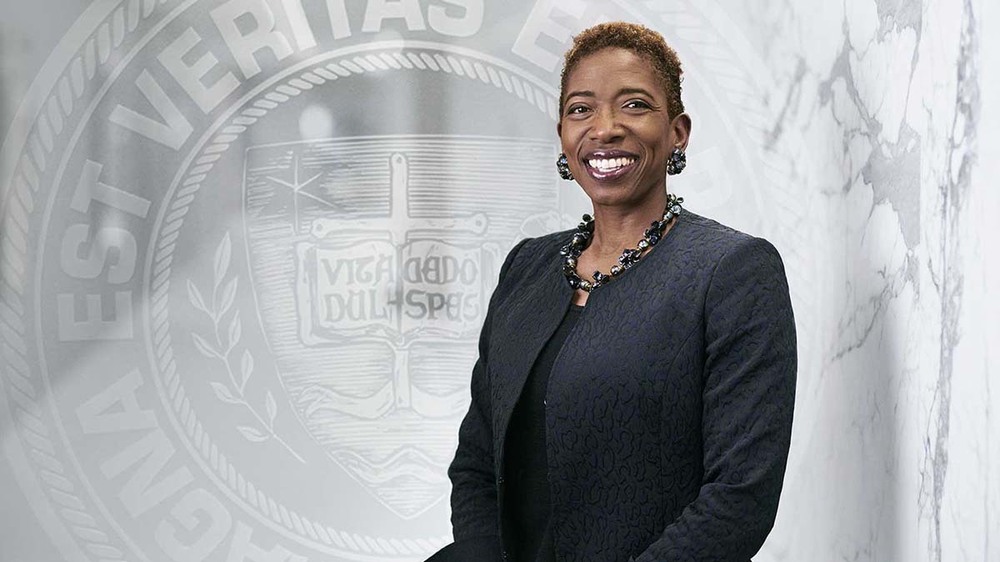
The Laetare Medal is an annual award given by the University of Notre Dame to recognize an individual who has displayed remarkable service to the Catholic Church, academics and society. At the commencement ceremony in May, the University will confer this distinction upon business leader, gospel singer, speaker and author Carla Harris.

As written in Notre Dame News

Harris currently serves as the vice chairman of wealth management and senior client adviser at Morgan Stanley and is on Harvard University’s and the Walmart Corp’s boards.

Throughout the course of her career, Harris has worked to promote women and people of color in business. She helped create Morgan Stanley’s Multicultural Innovation Lab and oversees the company’s multicultural client strategy as a whole.

Characteristic of Harris’ approach to her own success has been a mantra that has carried her beyond many obstacles and naysayers: “Never count yourself out.” Harris coaches others with a “negative motivation” approach, leveraging what people say cannot be done into energy to prove them wrong. She likewise understands her successes as a responsibility to help others, saying, “We are blessed so that we may be a blessing to others."

Her approach caught my attention. Negative motivation? It seems contradictory. To me, motivation feels inherently positive. It is fueled by optimism. But it's also driven by desire and Harris' life is testimony of a truth that too many women, too many people of color, too many people encounter. Many doors aren't open. Ceilings are made of something other than glass. The world says "no way," or even worse "there is no way." Harris' stands before herself and others and says We can. You can. I can....or rather "you/we/I cannot not do this!." And why not?!

Yasiel Puig has always been my example for addition by subtraction. Talented but not a great teammate the Dodgers have fared better without him.

In math, the multiplication of two negatives results in a positive. Every language, has a construction in which two negatives make a positive. And so it is with a reality that many people face. When people tell you to count yourself out, use negative motivation and prove them wrong. I think Carla Harris has it right.

I speak about Carla Harris in Episode 17 of my podcast FaithFondue. You can listen here!

Photo Credits
Carla Harris
Yasiel