Monday, November 8, 2010

Saints and Athletes: Similarity in Difference

Saints and sinners. Professional athletes these days seem to fall into one category or the other. But Robert Louis Stevenson said, “Saints are sinners who kept on going.” And no one knows the virtue of perseverance more than saints and athletes. The lives of the saints are one of the great treasures of the Catholic Church. Unfortunately, it is one tradition that is largely unfamiliar to my students. They know Peyton Manning, Buster Posey, and Serena Williams and yet I think they would benefit from meeting Thomas Merton and Therese of Lisieux. Can we learn the value of saints through the example of athletes? I think so.


Saints, like professional athletes, are known for their achievements and endeavors. Both have fans and followers; they make great sacrifices and more. Technically a “saint” is someone who has been canonized; officially recognized by the church as having lived a holy life, enjoys life in heaven with God and is worthy of public veneration by the faithful.

To me, canonization is similar to enshrinement in a sports hall of fame. Many a baseball fan that has made the pilgrimage to Cooperstown is grateful the sport has gone to great lengths to ensure a system for public veneration of the “legends.” We may not retire their number, but the relics, feast days and festivals that take place where they were born or ministered indicate a similar desire to honor their lives and livelihood. And once inducted, these men and women are referred to as a “Saint” with a capital “S.” Truly, they are spiritual heroes.


Yet, many of the “greats” in sports go unrecognized in history’s hallowed hallways. And, the same is true in the spiritual life. There are everyday saints among us; these are saints we refer to with a lower-case “s.” In his recent visit to the United Kingdom, Pope Benedict said, “he hoped that among his listeners there would be future saints. What God wants most of all for each one of you is that you should become holy.” Indeed, we are all called to be holy, to be saints.


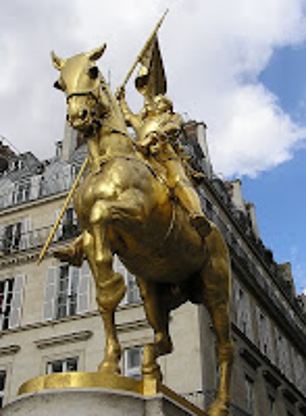
The best-selling book, “My Life With the Saints” by James Martin, SJ is a spiritual memoir of capital “S” and a lower case “s” saints. It chronicles the lives of 16 holy men and women who lived, struggled and died for their faith. “My Life With the Saints” begins with the biography of Joan of Arc--the first saint that Martin really “met.” After traveling to her hometown where she and was martyred, he decided to learn more about her life. As a result, she became for him, the first saint that was more than an image in a stained glass window or a name over a church door.

As I read Martin’s book, I asked myself “who was the first saint I really met?” Who is a holy man or woman whose story made an impact on me? I was drawn to St. Clare because of her beautiful name, blond hair, and love for St. Francis. I took Clare as my confirmation name but I didn’t know much more.


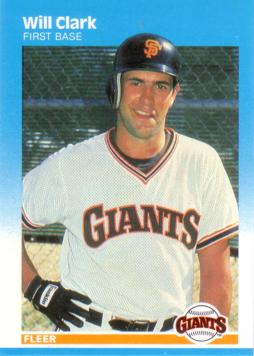
Dissatisfied, I thought about the first athlete I “met,” and that was easy to answer—Will Clark. I literally and figuratively met the Giants first baseman at Spring Training in Scottsdale, Arizona as he signed autographs. I read everything about “The Thrill.” –where he was born, what his hobbies were, where he played college baseball, what his achievements as a rookie were etc. William Nuschler Clark, Jr. will not be enshrined in the baseball hall of fame, but he is still beloved by Giants fans. At any game, you will see a robust number of “Clark 22” jerseys in the stands. Fans were delighted when he joined the Giants front office as a special assistant in 2009. “The Thrill” was no longer gone.


Is it wise for young people to “meet” the saints? Not only are the Saints one of the great traditions of the Catholic Church, but they are holy examples of those who have reached their full human potential. It is easy to measure that great athletes reach their potential, it is much more difficult to see that in everyday life-- the way we love one another, care for creation or serve those in need. But through meeting the Saints and saints around and before us, we may see otherwise.

Photo Credits

Therese of Lisieux
Peyton Manning
The Babe at Cooperstown
Will Clark

Saturday, November 6, 2010

October to November: Sports & More Sports to Spirituality

October is a robust time of year for sports and for spirituality! The tenth month of the year, the heart of autumn brings football standing surprises and the Fall Classic—the World Series. It is also Respect for Life Month, the month of the Rosary and the feast days of some beloved saints—Francis, the Archangels and more. It concludes with America’s second most widely celebrated holiday—Halloween, also known as “All Hallow’s Eve.” Although one would think the connection between Halloween and All Saints Day might also be robust, according to James Martin, SJ author of “My Life With the Saints” it’s not.

In Saints and All Hallows Eve a video clip featured on “Busted Halo James Martin SJ states “the Celts believed that day, October 31 marked the demarcation between one time of the year and another time. It was the day when the dead and the living were very connected. There was a kind of thin veil between the dead and living. That is one reason we wear masks on Halloween.”


I hate to disagree with one of my favorite authors, but I find the duality of the two days quite striking, and therefore the relationship quite strong. We celebrate Fat Tuesday before Ash Wednesday, we know the light because of the darkness, and we celebrate life even in death.

The Saints are holy men and women who have gone before us. We believe they enjoy life in heaven with God and are people who sought not to wear masks in this life. We venerate the saints because they lived holy and authentic lives. Thomas Merton said, “For me to be a saint means to be myself.” Simply put, they became what Michael Kelly encourages all Catholics to be “the best version of yourself.”


On Halloween, perhaps we fear those evil spirits that rest uneasily. Perhaps we recognize we too wear our own mask(s) and are not ready for eternal life with God. We have more work to do. But we wake up the next day, to the Feast of All Saints. Something we can all strive to be and to become.

Therefore, this month of November will be rich with blog postings related to the saints. And not to worry New Orleans Saints fans—your story is too rich, too incredible—I only hope my writing is worthy of what happened when you came marching into Super Bowl XLIV.

Photo Credits 
Fat Tuesday

Monday, November 1, 2010

The Language of the Saints: Pitching, Torture, Hustle...?

“Hardly any practice is so distinctively Catholic as the cult of saints.” As we read Avery Dulles’ “The Catholicity of the Church” I was disappointed that my students were exponentially more interested in the notion of a “cult” within Catholicism than in the saints. Matthew Kelly states “it is true, some people have placed too much emphasis on the role the saints play in Catholic spirituality.” But this is not the spirituality of the young people I teach. And it is unfortunate, for saints have made the same journey we are called to explore for ourselves. I believe if we learn their language, we can gain a better understanding of how a person is transformed in Christ.

What is the language of the saints? And how have those in this “cult” been transformed in Christ? My students are seeking answers vis-à-visMy Life With the Saints” by Jesuit priest, James Martin. It is more than the biography of sixteen holy men and women. To an extent, it is autobiography, yet it is ultimately an invitation to discover like the saints, how one can overcome struggles, faults and failings and still draw closer to God.

Martin’s companionship with the saints began in an unlikely place, at an unlikely time. Because of his passion for French, Martin traveled several times to France. One particular journey led him outside of Paris to Orléans, a city set free in 1429 by Joan of Arc. A Catholic Saint whose story was largely unfamiliar to him suddenly became a little more familiar. He decided to read more about her short life. He writes “Joan’s story introduced me to a new language: the special language of the saints—verbs like: believe, pray, witness and nouns like: humility, charity, ardor.”
I decided we would read each biography seeking new verbs and nouns—this language of the saints. My students met my request with a bit of a blank stare. What saint doesn’t “believe” and “pray?” What saint isn’t “humble” or a model of “charity.” They were right, even if the saints were largely unfamiliar to them. In response, I decided to apply this quest with the familiar—the San Francisco Giants to determine if could gain a better understanding of this “cult” and a new language. The 2010 Giants are a dynamic and talented team. They have been deemed “lovable” nationwide, but Martin’s language of saints doesn’t include adjectives. Descriptors are easy; but choices and actions—verbs—and what they have or possess—nouns—are different. It’s a nuanced way of thinking, but it invites a creative reflection. When I think of the Giants, verbs like: hustle and execute and nouns like: heart, pitching, torture and victory come to mind. Every game in the NLDS series was decided by one run. If the Giants didn’t hustle, the outcome could have been much different. All players, the pitchers, offense and defense, executed. If you’re a Giants fan, you understand the team’s unofficial motto: torture. (For NLDS) No game was lop-sided or decided early on. In fact, the final two games of the four games series were determined in the final two innings. At times it was torture for me to watch. But this team has a lot of heart. It lacks the strong personalities of the past. Because of outstanding pitching and teamwork, victory is ours!

This example prompted my students to seek the language of the saints familiar and unfamiliar to them, in the text and beyond it. Nouns: With the Blessed Mother we think of grace. We give hail to Mary, who was full of grace. With St. Monica, I think of persistence. She relentlessly prayed for the conversion of her son, St. Augustine. Thanks be to God she did! Because of him, we have a great theology. Verbs: Let’s be honest, many of the saints are extreme. St. Francis, St. Ignatius of Loyola are but two examples of men who were able to renounce luxury and privilege. Their stories may be too severe, but they are viable examples of people who chose otherwise. Furthermore, many of their stories incorporate the supernatural. Padre Pio was able to bi-locate. He was seen at two places at once. Natural law indicates this is not possible; supernatural law allows for it. St Thomas the Apostle doubted. What person doesn’t struggle with their faith? Despite his doubt, He was also the first apostle to recognize Christ Jesus as the Risen Lord with his words “My Lord and My God!” And the list goes on… 
The unofficial theme song of the 2010 San Francisco Giants is Don’t Stop Believin’ I think the same is true for one of the great spiritual treasures of the Catholic Church—the saints. Let us learn their language, for they can lead us to victory in Christ.

Photo Credits
Tapestry of the Saints
Joan of Arc
Giants Win the Pennant
Posey & Baum

Sunday, October 31, 2010

WCAL Product: Pat Burrell

Sports Illustrated ran a humorous, albeit potentially sacrilegious piece prior to the 2002 World Series (yes, Game 6 still hurts). It featured a photo of a milk carton and on its side the Missing! campaign for kidnapped children. This one said: “Missing in the month of October” underneath two photos of Barry Bonds. In his prior post-season appearances, Bonds had performed so miserably in baseball’s sacred month, one could not help but wonder if the power hitting offensive machine was missing. Where did he go?

Unfortunately for the 2010 Giants, it seems that Pat Burrell could appear on our post-season milk carton. He is 0-for-9 in the World Series with eight strikeouts and has 19 strikeouts through the Giants' 13 postseason games. Much to his credit—enough that it became the focus of the article PAT BURRELL Struggling outfielder lost in sea of strikeouts. Jenkins writes, "Burrell was one of the first Giants to address reporters after the game. At times like this, a lot of players hide out interminably in the players' lounge, weight room or training quarters, but Burrell wanted to get it over with." I would like to think that Burrell took the higher road, because of what he learned as an athlete in the WCAL—Western Catholic Athletic League.

Burrell transferred from San Lorenzo High School to Bellarmine College Prep before his sophomore year. Bellarmine, an all boys Jesuit high school in San Jose was a member of the competitive WCAL, which he believed would give him the visibility he needed to be discovered by pro scouts and major college coaches.


A naturally gifted athlete, Burrell originally played football, basketball and baseball. As the Bells’ varsity starter at quarterback during his junior year, he competed against Tom Brady who played for Junipero Serra High School. Brady made headlines in January 2010 when he said "I think we're way overpaid as it is, all of us," Brady said Jan. 25 while making a Boston-based appearance for charity. "We get to go play football for a living. I love playing, and I'm very fortunate to play. … [The contract is] not really a concern." Did Brady have the guts to say this because of what he learned at Serra? That’s not for me to determine. However, I can say as much fun as its been to wear orange and black at school this past week, I know one religious studies class has undertaken serious conversations about the justice of athlete’s salaries and what it reveals about our society. I suppose a small part of us should delight in the fact that the two teams with the highest payrolls in Major League baseball are not in the Series. Rather, it’s the Giants at number 10 (with a payroll of $97,828,833) and the Rangers at number 27 (with a payroll of $55,250,545).

In “A Coveted Title, A Catholic League” I wrote about what makes this league unique. One may say all ten schools are “private” or their success lies in their indirect “open enrollment.” However, as a teacher and a coach at a flagship WCAL school, St. Ignatius, I am asked to model time and again the values we inculcate and to bear witness to the Good News of the Gospel of Jesus Christ. You can cite Brady and Burrell's transgressions, call me idealistic, even "Pollyanna" but if we don't believe our student athletes are experiencing something different--something greater, than what are we doing? Why are we here?


Our student athletes, like Pat Burrell may initially seek a WCAL school because they are "higher profile" but my guess is they leave with a sense of the “magis”—something more, of speaking the truth when it may be difficult and to own up to responsibility when it might be easier to be missing. They will also find a community of concern and a tradition of excellence that is larger than their success or their salary. Pat Burrell is the third Bellarmine alum with a World Series Ring. Along with Marv Owen ’26, of the 1935 Detroit Tigers and Ed Giovanola ’87 of the 1995 Atlanta Braves in 1995; Burrell won his first ring with the Phillies in 2008. I just hope the next posting in the alumni magazine of Bellarmine College Prep will include the photo of a 2010 San Francisco Giants World Series ring.

Photo Credits
Missing! Logo
Pat Burrell: Orange Fridays
Bellarmine Crest
World Series Logo

Monday, October 4, 2010

One Lovable Team, One Lovable Saint

Saint Francis: the patron saint of the city by the bay—San Francisco. Today, October 4 is the feast day of Francis of Assisi, and if you are a San Francisco Giants fan, today is a feast day as well. For the first time since 2003, the Giants are the National League Western Division Champions.


I woke up this morning with a smile on my face, ready to read two important items 1) “These Lovable Giants” a posting on SI.com recommended by KNBR’s Murph and Mac
and 2) "Fools For Christ: Francis of Assisi" by James Martin, SJ for class. As I read the excerpt from Martin’s popular book “My Life with the Saints” I was surprised to learn Francis is recognized as “the world’s most popular saint.” I hadn’t thought about who might hold this crown. It made sense and still Martin’s views resonated with me:

But as much as I found him a charming figure, my understanding of the world’s most popular saint was the rather sentimental one that is common today: as a sort dopey but well-meaning hippie who talked to birds. As Lawrence S. Cunningham notes in Francis of Assisi such a view is “most completely summed up the ubiquity of those concrete garden statues with a bird perched on the saint’s shoulder found in everyone’s garden center.” In this conception, Francis was cheerful no doubt, but also a little bland. “Such an understanding is coterminous with what I would call spirituality lite.” Francis of Assisi is a good example of why the legends should never overshadow the actual life. For within his life, many surprises await those willing to meet Francis...

What anyone who reads about St. Francis may be surprised to learn is just how tremendous was his love for Christ, for all of creation, for the poor and for life. His conversion, travels, preaching and writings are testimony of this love.
His great ability to love and to be loved, as cited in the prayer of St. Francis, makes him, well, lovable.

And, the same is true of the 2010 San Francisco Giants.
Fans that have supported the Giants, even in July when they were in fourth place in the division, know about the numerous surprises that characterize this victory as particularly sweet. In “These Lovable Giants” Joe Posnanski writes, “here’s the thing that makes these San Francisco Giants different: They’re lovable.” Nothing demonstrated that quality more than when “the players and coaches and manager Bruce Bochy all made a full lap of the field, high-fiving all those fans leaning over the fence.”


Like St. Francis, The popularity of the 2010 Giants is
for good reason; they played incredible baseball in September. Their pitching staff is to be feared—with or without the beard. I would love to see them play all the way into November! And it’s good to see that the popularity of St. Francis remains. In 2009, the Franciscans celebrated 800 years of ministry. Francis' teachings about creation as a manifestation of God have impacted the Church's theology about creation such that Pope John Paul II declared St. Francis the patron saint of ecology in 1980. My sister shared with me at this weekend’s Hardly Strictly Bluegrass Festival Patti Smith spoke to the crowd about St. Francis’ life and legacy. In fact, she read his prayer at about the same time the Giants clinched the pennant.

Today, however, is a feast day. We remember, we celebrate, we believe. Humm Baby!